
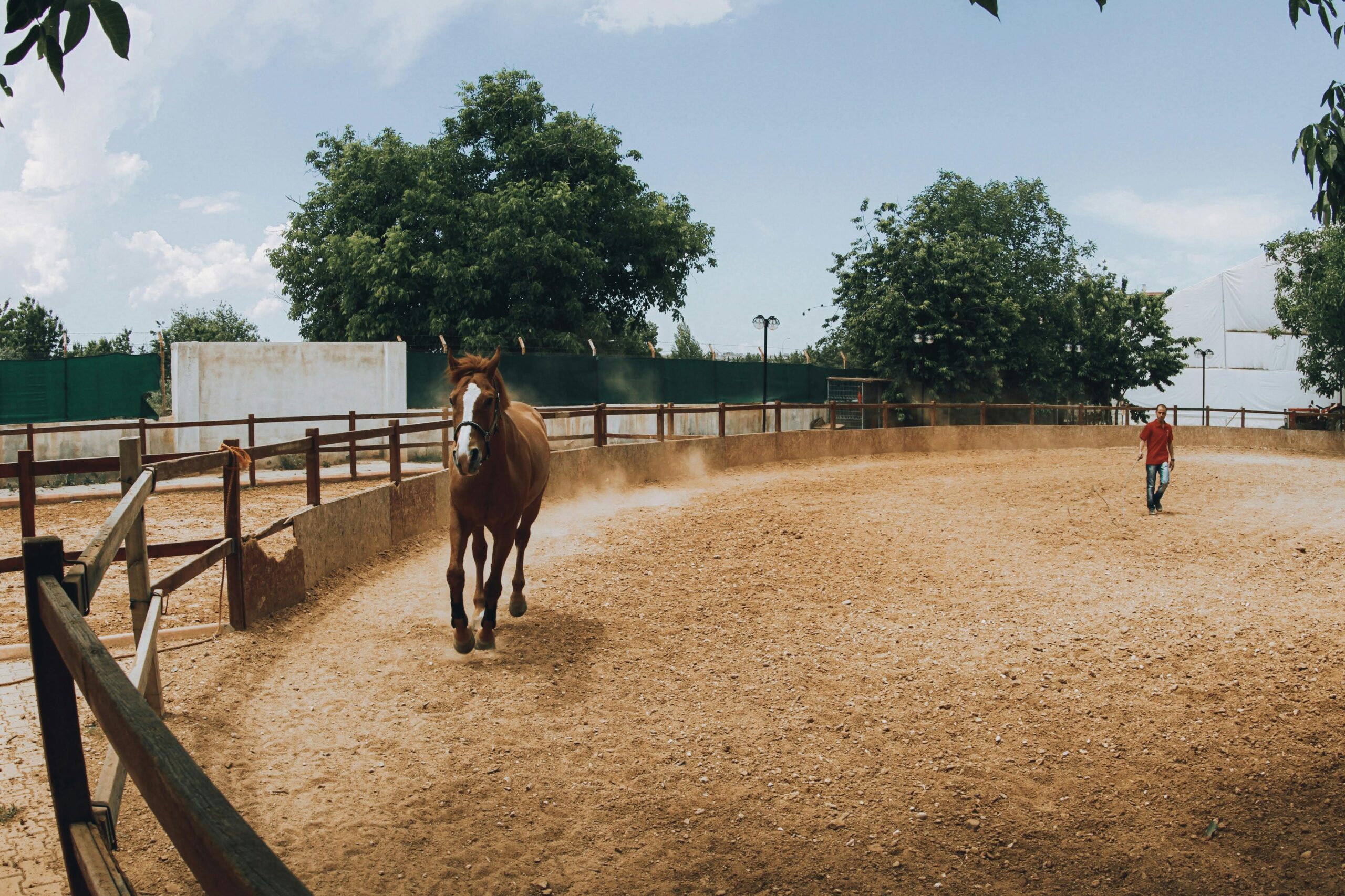
Turnout is not a one-size-fits-all decision. A well-managed pasture, dry lot, paddock, or track can support excellent welfare when it gives horses safe movement, forage, water, rest, and appropriate social contact. The useful comparison is not “track systems versus traditional turnout” in the abstract; it is which layout works for the horses, land, climate, and daily management available at your facility.
What is a track system?
A track system uses fencing to create a perimeter pathway, usually around a central area that can be rested, mowed, or managed separately. Hay, water, shelter, mineral access, and enrichment are placed at different points so horses have a reason to walk between resources. The aim is to increase voluntary movement and make better use of the property—not to force exercise or imitate free-ranging conditions perfectly.
Track layouts vary widely. Some are broad grass lanes; others combine pasture with a surfaced dry-lot section. The safest design keeps corners open enough for horses to pass, provides more than one route to essential resources, and avoids bottlenecks where a dominant horse can block access.
Strengths of traditional turnout
Traditional turnout can be an excellent choice. A large, well-drained pasture with compatible companions may provide movement, grazing, social contact, shade, and space to rest without extra perimeter fencing. Rotational grazing can protect the sward and reduce overuse, while a dry lot or sacrifice paddock can protect pasture during wet weather or controlled feeding periods.
“Traditional” does not have to mean static. Moving water, hay, or temporary fencing, adding safe enrichment, and varying turnout groups can increase activity without converting the whole property into a track. Management quality matters more than the label attached to the system.
Where track systems may help
Movement and body condition
Separating forage, water, and shelter can encourage more walking than concentrating every resource beside one gate. That may be useful for easy keepers or horses that spend long periods standing, but it is not a treatment for obesity, insulin dysregulation, or laminitis. Diet, body-condition monitoring, and veterinary advice remain central, especially for horses with metabolic risk.
Forage control
A track can make it easier to rest the center of a field, ration access to rich grass, or use slow-feeding methods. Any restriction must still provide adequate forage and should be planned with an equine nutrition professional when a horse has a medical condition. Never reduce feed abruptly or use a track as a substitute for a safe feeding plan.
Environmental variety
Changes in terrain, safe browsing, shade, and multiple resting areas can give horses more choice. Surfaces must be stable, non-slip, and suitable for the individual horse. Sharp rock, deep mud, exposed roots, and abrupt transitions can turn “variety” into an injury hazard.
Track-system drawbacks and safety checks
Concentrated traffic can create mud, manure buildup, erosion, and slippery footing. Before adding a narrow lane, map water flow and runoff, then plan high-traffic surfaces around gates, water points, feeders, and shelter entrances. A properly prepared base and suitable footing can reduce maintenance; mats may be useful in specific stable or covered high-traffic areas, but they do not replace grading, drainage, or regular cleaning.
Inspect fencing, gates, corners, and resource stations every day during the first weeks. Provide enough space and duplicate resources for group turnout. Watch for chasing, guarding, weight loss, unequal access to water, and horses choosing to stand in one uncomfortable location. Introduce new horses gradually and have a separation plan.
How to choose between the two
- Start with the horse: consider age, soundness, metabolic status, respiratory health, temperament, and social needs.
- Study the site: assess soil, slope, drainage, prevailing weather, available acreage, shade, and emergency access.
- Measure management capacity: a sophisticated track that cannot be maintained is worse than a simple, well-run paddock.
- Protect essential access: every horse must be able to reach forage, water, shelter, and a safe resting area without conflict.
- Change one variable at a time: monitor body condition, hooves, manure, behavior, and footing after any layout or feeding change.
A practical hybrid approach
Many facilities can combine the best features of both systems. Use a larger pasture when conditions allow, a surfaced sacrifice area during wet periods, temporary lanes to distribute grazing pressure, and multiple hay or water points where safe. This approach preserves flexibility while adding movement opportunities and protecting the land.
For related facility planning, see how to design safer horse facilities, how surface type affects equine biomechanics, arena footing and drainage guidance, and barn air-quality management.
FAQ
Are track systems better than pasture turnout?
Not automatically. A track may increase movement and help manage forage, while a well-managed pasture may already provide excellent movement and social opportunities. The safer system is the one that meets the individual horses’ needs and can be maintained properly.
How wide should a horse track be?
There is no universal width that works for every property or herd. Width must allow horses to pass safely, accommodate the largest horse, provide escape options, and avoid dead-end or trapping points. Have the layout reviewed by an experienced equine-facility professional before construction.
Do track systems prevent laminitis?
No. A track can help some owners manage grazing and encourage movement, but laminitis prevention depends on the horse’s diet, health, body condition, and veterinary plan. A horse at risk should not be placed on a new system without professional guidance.
How do you control mud in a track system?
Begin with drainage and traffic planning, then stabilize high-use areas with appropriate base and footing. Keep water moving away from the track, maintain gates and feeder areas, remove manure, and adjust access during wet conditions. Surface materials should be selected for the local soil and the horses using them.
Bottom line
Track systems are a useful design tool, not a universal prescription. Traditional turnout remains highly effective when it provides safe movement, forage, social contact, and environmental choice. Build around the horse, the land, and the care routine—and judge success by soundness, behavior, body condition, footing, and reliable access to essentials.

Written by
Phoebe writes about horse care, health, and behavior for Equestrian Space, blending hands-on stable experience with up-to-date veterinary guidance.
yVGVHDvmgpBcgqfZUbAbU