
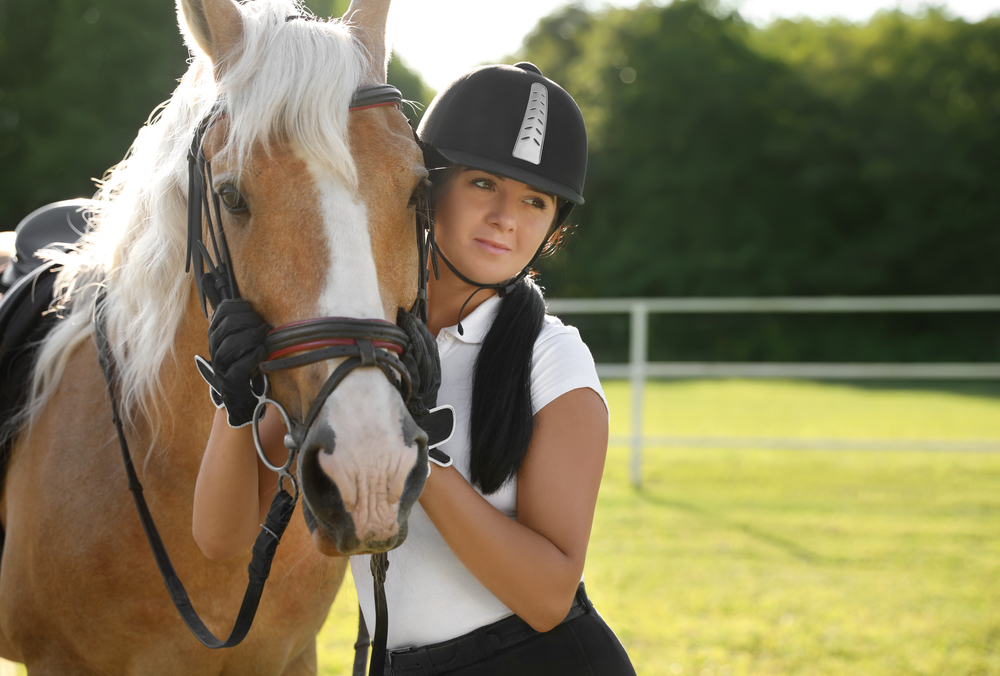
Liberty training often captures attention through breathtaking displays: a horse cantering freely beside a person, lying down on cue, performing intricate maneuvers without ropes or reins, or responding to subtle gestures with apparent ease. Videos of these performances frequently attract admiration and curiosity, inspiring many horse owners to explore training without physical restraints.
Yet liberty training is far more than a collection of impressive tricks.
At its core, liberty training is the art of communicating with a horse through trust, understanding, and voluntary cooperation. It is not simply about teaching behaviors in the absence of tack; it is about developing a relationship in which the horse chooses to participate.
When approached thoughtfully, liberty work can deepen partnership, enhance communication, and reveal important insights about both horse and human.
What Is Liberty Training?
Liberty training refers to working with horses without physical restraints such as lead ropes, reins, or lunge lines. The horse is free to move away, disengage, or choose not to participate.
Because the horse is not physically constrained, successful liberty training depends largely upon:
- Clear communication.
- Consistency.
- Timing.
- Motivation.
- Mutual trust.
The absence of restraint fundamentally changes the nature of the interaction. Rather than relying primarily on physical control, trainers must cultivate willingness.
In many ways, liberty work asks a simple but profound question:
“Will the horse choose to stay with me when it does not have to?”
Beyond Performance and Entertainment
Public demonstrations of liberty training often emphasize spectacular behaviors:
- Rearing.
- Lying down.
- Bowing.
- Cantering circles at liberty.
- Complex choreographed routines.
While these behaviors can showcase remarkable communication, focusing exclusively on performance risks overlooking the deeper purpose of liberty work.
True partnership is not measured by how many tricks a horse can perform.
Instead, it may be reflected in subtler moments:
- A horse choosing to approach voluntarily.
- Soft, attentive body language.
- Relaxed movement and emotional balance.
- Willingness to remain engaged without coercion.
- Confidence in unfamiliar situations.
These seemingly simple interactions often represent profound levels of trust.
The Foundation: Relationship Before Technique
Many newcomers to liberty training become eager to teach advanced behaviors immediately. However, meaningful liberty work begins long before any formal exercise.
The foundation lies in relationship.
Important elements include:
Trust
Horses must feel physically and emotionally safe.
Trust develops through:
- Predictable interactions.
- Fair handling.
- Respect for the horse’s emotional state.
- Consistent communication.
Trust cannot be demanded; it must be earned repeatedly.
Understanding Equine Behavior
Successful liberty trainers develop strong observational skills.
Recognizing subtle indicators of:
- Relaxation.
- Tension.
- Curiosity.
- Confusion.
- Frustration.
- Motivation.
allows trainers to adapt appropriately and maintain effective communication.
Emotional Regulation
Horses are highly sensitive to human emotions and body language.
Frustration, inconsistency, or impatience can quickly undermine communication.
Liberty work often challenges humans to become more aware of their own emotional states and physical presence.
Voluntary Participation: The Heart of Liberty
Perhaps the defining feature of liberty training is choice.
Because the horse is physically free, participation becomes voluntary.
This freedom offers valuable information:
- Does the horse remain engaged?
- Does it seek interaction?
- Does it appear relaxed and curious?
- Does it choose to return after moving away?
A horse repeatedly leaving or disengaging should not necessarily be interpreted as disobedience.
Instead, such behavior invites important questions:
- Is the training sufficiently motivating?
- Is the horse confused?
- Is the session too difficult?
- Is discomfort or pain present?
- Are emotional needs being overlooked?
Liberty work encourages trainers to prioritize understanding over control.
Communication Through Body Language
At liberty, body language becomes especially important.
Horses communicate primarily through posture, movement, and spatial relationships. Effective trainers learn to use similar principles.
Key elements include:
Energy
Changes in personal energy can influence movement, attention, and responsiveness.
Higher energy may encourage forward motion, while lower energy may promote relaxation.
Position
A trainer’s position relative to the horse can affect direction, speed, and engagement.
Subtle shifts in body orientation often communicate more effectively than exaggerated gestures.
Timing
Precise timing is essential.
Rewarding desired responses at the appropriate moment helps horses understand expectations clearly.
Poor timing can create confusion and frustration.
Motivation Matters
Because horses cannot be physically compelled to remain engaged, motivation plays a central role in liberty training.
Different horses may be motivated by:
- Food rewards.
- Scratching or tactile reinforcement.
- Opportunities for movement.
- Curiosity and exploration.
- Social interaction.
Modern learning theory increasingly emphasizes the importance of positive reinforcement within liberty work.
Reward-based approaches can encourage enthusiasm, agency, and emotional well-being.
However, regardless of the methods employed, ethical training prioritizes the horse’s welfare and emotional state.
Common Misconceptions About Liberty Training
“Liberty Means Complete Freedom”
Although liberty training emphasizes choice, it still involves structure, boundaries, and clear communication.
Freedom does not mean the absence of expectations.
“Only Special Horses Can Do Liberty”
Virtually all horses can participate in liberty work at some level.
Temperament, previous experiences, and individual preferences may influence training approaches, but meaningful partnership is not limited to exceptionally talented horses.
“Liberty Is Just Trick Training”
While tricks can be part of liberty work, they are not its defining feature.
The essence of liberty lies in relationship, communication, and voluntary cooperation.
“A Horse That Leaves Is Being Disrespectful”
Horses move away for many reasons.
Interpreting disengagement solely as disrespect risks overlooking important information about motivation, understanding, or welfare.
Liberty Training as Personal Growth
Many trainers discover that liberty work teaches as much about humans as it does about horses.
Because coercion is minimized, trainers are often challenged to develop:
- Patience.
- Self-awareness.
- Emotional regulation.
- Observation skills.
- Creativity.
- Humility.
The horse becomes an honest mirror, reflecting inconsistencies, tension, and communication gaps.
For this reason, liberty training can become a powerful journey of personal development.
Ethical Considerations
As liberty performances become increasingly popular on social media, ethical questions deserve attention.
Spectacular behaviors should never take precedence over welfare.
Responsible liberty training requires:
- Respecting the horse’s physical limitations.
- Avoiding excessive repetition.
- Allowing meaningful choice.
- Monitoring emotional well-being.
- Ensuring training remains enjoyable and voluntary.
A visually impressive performance does not necessarily indicate a healthy partnership.
True partnership is revealed through the horse’s willingness, relaxation, and trust.
Measuring Success
Success in liberty training cannot be measured solely by advanced behaviors.
Meaningful indicators include:
- The horse voluntarily approaching.
- Relaxed and attentive body language.
- Consistent engagement.
- Curiosity and confidence.
- Mutual enjoyment of sessions.
- Strong communication in everyday interactions.
These qualities often extend beyond liberty sessions and positively influence all aspects of horsemanship.
Final Thoughts
Liberty training invites horse and human to develop a relationship founded not on restraint, but on communication and choice.
While tricks and performances may capture attention, they represent only a small part of what liberty work can offer.
At its best, liberty training fosters trust, empathy, and a deeper understanding between species.
The most remarkable achievement is not teaching a horse to perform extraordinary behaviors.
It is creating a partnership in which the horse freely chooses to stay, engage, and learn alongside you.
That choice, repeated day after day, may be the truest expression of partnership that horsemanship can offer.
Related Guides
If you found this helpful, these related articles cover more ground:
- Slow Training: The Case for Taking More Time Than Necessary
- Do Horses Consent? Rethinking Choice in Training and Riding
- Neuroplasticity in Horses: Can Training Physically Change the Brain?
- When Horses Say No: Consent, Choice, and Agency in Training
- The Science of Softness: Why Gentle Training Works Better

Written by
Phoebe writes about horse care, health, and behavior for Equestrian Space, blending hands-on stable experience with up-to-date veterinary guidance.