
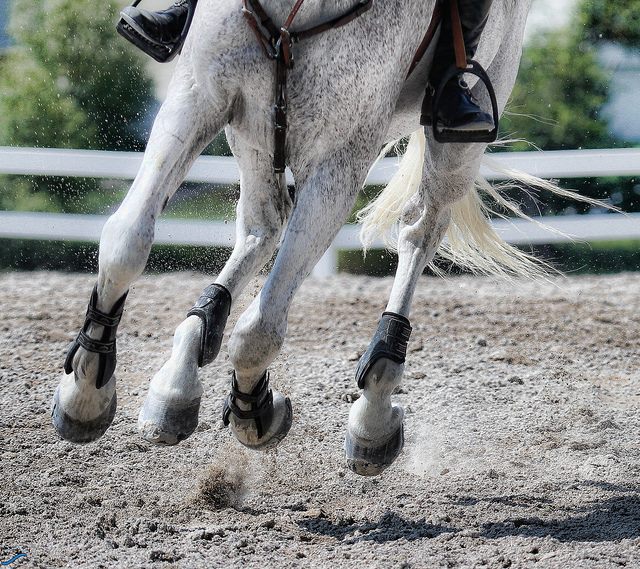
Arena footing is not simply a layer of sand. It is a working surface designed to balance traction, cushioning, stability, moisture control, and drainage. When those factors are out of balance, horses may slip, work unevenly, become fatigued, or show soreness. A safe arena starts with a well-prepared base and stays safe through consistent maintenance—not a one-time choice of top material.
How an arena footing system works
Most arenas have three functional layers:
- Subgrade: the native soil, shaped and compacted to provide a stable foundation.
- Base: a compacted structural layer that supports the surface and helps water move away.
- Top footing: the working layer that provides the desired feel under the hoof.
The top layer cannot compensate for a poorly graded or unstable base. Before selecting sand, fiber, rubber, or another amendment, evaluate soil, climate, drainage, expected use, and the equipment available for maintenance. A local arena specialist or agricultural extension professional can help with site-specific design.
What good footing should provide
Consistent support
A horse should encounter a predictable surface through corners, straightaways, takeoff areas, and landing zones. Deep pockets, hard patches, or loose edges force the horse to adjust stride and balance. Dragging can redistribute material, but it cannot fix a base that is failing or a surface that has lost too much material.
Traction without excessive grip
Footing must allow push-off, turning, and stopping without becoming slick or grabbing the hoof. Too little traction increases slipping risk; excessive grip can increase torsional stress during turns. The correct feel depends on discipline, speed, footing depth, and the individual horse. Do not assume that a softer or stickier surface is automatically safer.
Moderate cushioning and controlled depth
Deep, loose footing can increase effort and strain tendons and muscles, particularly when it is uneven. Compacted or shallow footing can increase concussion. Measure and monitor the surface rather than relying on a generic depth recommendation: the suitable depth depends on the base, material, discipline, and maintenance plan.
Drainage and moisture control
Water changes footing behavior. A saturated surface may become slick or develop ruts, while a dry surface can become dusty and lose cohesion. The arena should shed water through its grade and base system, and the surface should be watered only as needed for dust and consistency. For broader horse-facility planning, see our guide to sustainable horse barn design. Standing water, persistent wet spots, or footing that moves toward the perimeter are reasons to inspect grading and drainage—not simply add more top material.
Common arena footing materials
Sand
Sand is common, but “sand” is not a single performance category. Particle size, shape, cleanliness, mineral composition, and fines affect drainage, compaction, dust, and stability. Ask for material information and test a sample in the arena rather than choosing by color alone.
Sand with fiber
Fiber can improve stability and help the surface hold moisture, but it changes maintenance requirements. Organic and synthetic fibers behave differently, and material can migrate or break down over time. Confirm how the blend should be watered, dragged, stored, and replenished.
Rubber and other amendments
Rubber may add cushioning, but it does not repair poor drainage or an unstable base. Consider particle size, cleanliness, heat retention, migration, and disposal. Any amendment should be selected for the whole system and the horse’s actual work, not marketed as a universal injury-prevention solution.
Maintenance routine for safer footing
- Before each ride: walk the arena and check for holes, exposed base, standing water, debris, and obvious hard or deep spots.
- After use: remove manure and large debris, especially in high-traffic areas.
- Drag consistently: use a pattern and equipment that redistribute material without pushing it permanently to the rail. Follow the footing supplier’s guidance.
- Manage moisture: water for dust and cohesion when appropriate, but avoid creating a saturated or slick surface.
- Track changes: note where footing accumulates, where horses slip, and where the surface becomes deep or compacted.
- Re-level strategically: correct low areas and perimeter buildup before adding new material. Top-up material only after identifying where the existing footing went.
University guidance emphasizes that footing can accumulate at arena edges and interfere with drainage, making regular redistribution important. A maintenance log with dates, weather, watering, dragging, and repairs can reveal problems before they become expensive.
Warning signs that footing needs attention
Pause and investigate when horses repeatedly stumble, slip, shorten a stride, resist a corner, or show new soreness after arena work. Also inspect the footing when you find deep tracks, ruts, exposed base, excessive dust, persistent puddles, strong surface variation, or a pronounced ridge at the fence line. These signs do not diagnose an injury, so involve a veterinarian when a horse shows lameness or persistent discomfort.
Match the surface to the work
Dressage, jumping, western events, hacking, conditioning, and rehabilitation place different demands on a surface. A jumping arena needs predictable takeoff and landing zones; a dressage arena needs uniform support for repeated transitions and lateral work; a rehabilitation surface must be chosen with veterinary and professional input. Design for the work you actually do, and reassess if the arena’s use changes.
Keep the arena separate from stall-floor decisions. Arena footing is an outdoor or indoor riding-surface system; stall mats address standing comfort, traction, cleaning, and subfloor protection in a stable. Treating them as interchangeable leads to poor recommendations.
When to call a professional
Get an evaluation when drainage fails, the base is exposed, the arena repeatedly develops ruts, a major material change is planned, or horses show a pattern of slipping or soreness. A professional can assess grade, base, surface depth, and material compatibility. If the problem is structural, adding another truckload of footing may only hide it temporarily.
FAQ
How often should an arena be dragged?
It depends on traffic, weather, material, and equipment. Inspect after every use and drag often enough to redistribute wear without creating ridges or moving footing out of the working area. Follow the surface supplier’s maintenance instructions.
Is deeper footing safer for horses?
Not necessarily. Excessively deep or loose footing can increase effort and strain, while shallow or compacted footing can increase concussion. Aim for consistent, discipline-appropriate support and have problem areas evaluated.
Can rubber fix poor arena drainage?
No. Rubber may change cushioning or feel, but it cannot replace correct grading, a functioning base, or drainage. Correct water-management problems before choosing an amendment.
What should I do if my horse slips in the arena?
Stop and inspect the surface, especially the location of the slip. Check for wet, compacted, loose, or uneven footing and correct the hazard before continuing. If slipping repeats or the horse shows soreness, seek professional and veterinary guidance.
Related guides and sources
- Crumb rubber footing and injury-prevention considerations
- How surface type affects equine biomechanics
- Horse jumping obstacles explained for beginners
- Penn State Extension: Riding arena footing material selection and management
- University of Minnesota Extension: drainage and high-traffic horse facility areas

Written by
Phoebe writes about horse care, health, and behavior for Equestrian Space, blending hands-on stable experience with up-to-date veterinary guidance.