
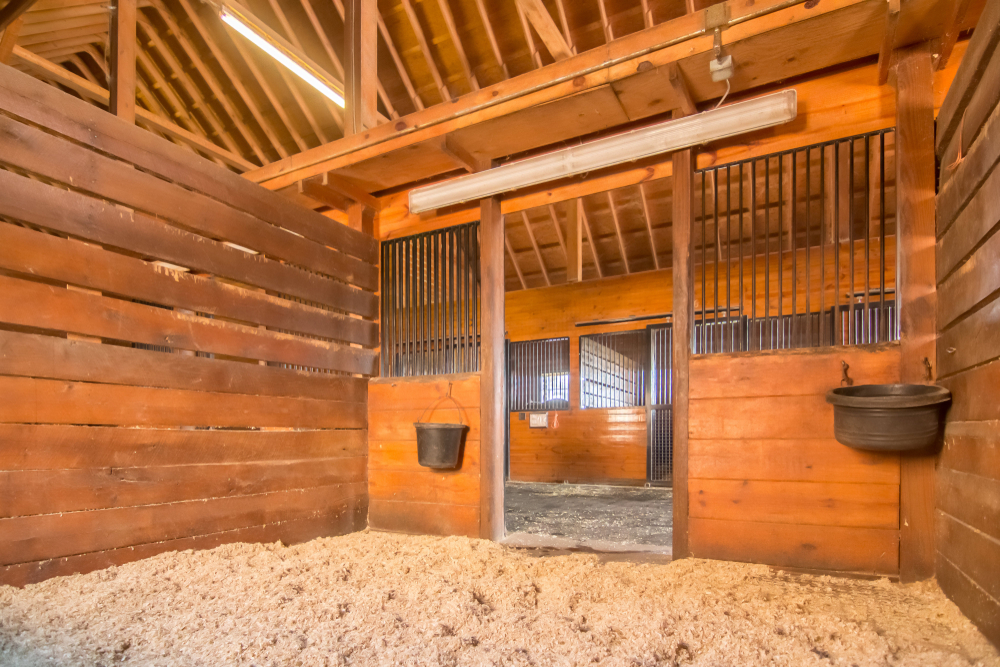
Dust, mold, and ammonia are not just unpleasant barn smells. They can irritate the airways of horses and people, and stabled horses may be exposed for many hours each day. For a broader overview of respiratory risks and management, see our guide to equine respiratory health. The most useful approach is not to chase a single “perfect” product; it is to reduce respirable dust at its sources, keep air moving without creating drafts, control moisture, and involve a veterinarian when a horse coughs or breathes abnormally.
Why barn air quality matters
Equine asthma is associated with sensitivity to airborne particles and irritants, including organic dust from hay and bedding, mold components, pollen, and noxious gases. Merck Veterinary Manual identifies dusty hay and bedding as common sources and recommends low-dust feed and bedding in a well-ventilated environment. A horse with recurrent cough, nasal discharge, exercise intolerance, increased effort, or flared nostrils needs veterinary assessment; do not assume every breathing problem is “just dust.”
Where barn dust and irritants come from
Hay and feed
Hay is often the largest controllable source of respirable particles. Mold-free hay can still contain fine dust. Shake out or move hay away from occupied stalls, store it dry, and avoid feeding visibly moldy forage. For a horse with respiratory disease, ask your veterinarian whether soaking or steaming hay is appropriate. These methods can reduce airborne dust, but they are not a substitute for good forage selection or medical care.
Bedding and stall cleaning
Straw, shavings, and other bedding products vary in dust content. Choose a clean, low-dust material and store it under cover. Remove wet spots and manure routinely so urine does not accumulate and produce ammonia. Do not sweep or blow dusty aisles while horses are standing nearby; move horses out first, dampen dusty surfaces when practical, and allow particles to settle before returning them.
Moisture, manure, and poor drainage
Wet bedding, leaking waterers, roof leaks, and poorly drained stall floors create conditions for odor and mold. Inspect the floor under the bedding, not only the visible top layer. Solid rubber mats can make a stall easier to clean and more comfortable, but they do not absorb urine. They must sit on a stable, appropriately sloped or drained base, and bedding still needs to be managed. See our guide to choosing horse stall mat thickness before buying or installing mats.
Ventilation: fresh air without drafts
Ventilation should bring clean air into the breathing zone and carry moisture, dust, and ammonia out. Penn State Extension notes that contaminants concentrate near the floor and recommends evaluating air distribution at both floor level and horse-head height. Open ridge vents, high-level outlets, windows, and doors can support natural air exchange. Fans may help, but never aim a fan directly at dusty bedding or blow contaminated air from one stall toward another.
A barn can feel comfortable to a person while still having poor air at the horse’s nose. If you smell ammonia, treat that as a warning to investigate cleaning, drainage, bedding depth, and airflow. A simple observation routine helps: check the barn at different times of day, look for condensation, note odors at stall level, and watch whether dust hangs in the air after cleaning.
Practical barn air-quality checklist
- Keep hay, bedding, and feed dry and protected from contamination.
- Choose low-dust forage and bedding; ask a veterinarian about soaking or steaming hay for a horse with asthma.
- Feed and clean when horses are out of the immediate dust cloud whenever possible.
- Remove manure and wet bedding frequently rather than covering it with fresh material.
- Repair leaks and correct standing water around stalls, wash areas, and feed rooms.
- Keep ventilation openings clear; do not seal a barn tightly during cold weather.
- Separate indoor arenas and dusty work areas from stalls when the layout allows.
- Clean fans, rafters, ledges, and light fixtures so settled dust is not repeatedly redistributed.
- Use safe, non-slip flooring and keep mats tight and level; review our guide to one-piece versus individual stall mats when planning an installation.
- Record cough, nasal discharge, breathing effort, and exercise tolerance so your veterinarian can identify patterns.
How flooring and mats fit into the plan
Flooring is one part of air-quality management, not the whole solution. A well-installed rubber mat can reduce the amount of loose dusty bedding needed and simplify removal of wet spots. It can also improve traction, but only when the surface is clean, properly fitted, and compatible with the subfloor. Compare the practical trade-offs in our guide to recycled rubber barn mats. If you are comparing products, Treadall’s horse stall mat options are one commercial reference point; evaluate any brand against drainage, fit, traction, durability, and your barn’s cleaning routine.
When to call the veterinarian
Seek veterinary advice for persistent or recurring cough, nasal discharge, noisy breathing, poor performance, increased effort at rest, fever, or a horse that is reluctant to exercise. Urgent care is appropriate when breathing is severely labored, gums look abnormal, or the horse is distressed. Environmental changes can support treatment, but a diagnosis and management plan should come from an equine veterinarian.
Frequently asked questions
What is the fastest way to reduce dust in a horse barn?
Start with the biggest sources: forage, bedding, and cleaning. Remove horses from dusty work, improve air exchange, use low-dust materials, and address wet bedding and ammonia. For an affected horse, consult your veterinarian promptly.
Is rubber matting enough to prevent respiratory problems?
No. Mats may reduce the amount of loose bedding and help with cleaning, but they do not replace ventilation, dry management, clean forage, or veterinary care. Mats also need drainage and regular cleaning because rubber does not absorb urine.
Should I soak hay for a horse with a cough?
Soaking or steaming may reduce respirable dust for some horses, but the best method depends on the cause and severity of the problem. Ask your veterinarian before changing forage management, especially if the horse has weight, nutrition, or respiratory concerns.
How can I tell if barn ventilation is poor?
Persistent ammonia odor, condensation, stagnant air, visible dust, and respiratory signs are warnings. Check air at floor and horse-head height and inspect whether vents are blocked. A veterinarian or qualified equine-facility professional can help assess a persistent problem.
Sources: Merck Veterinary Manual: Asthma in Horses; Penn State Extension: Horse Stable Ventilation; Penn State Extension: Horse Stable Flooring Materials and Drainage; AAEP: Equine asthma environmental management.

Written by
Phoebe writes about horse care, health, and behavior for Equestrian Space, blending hands-on stable experience with up-to-date veterinary guidance.