
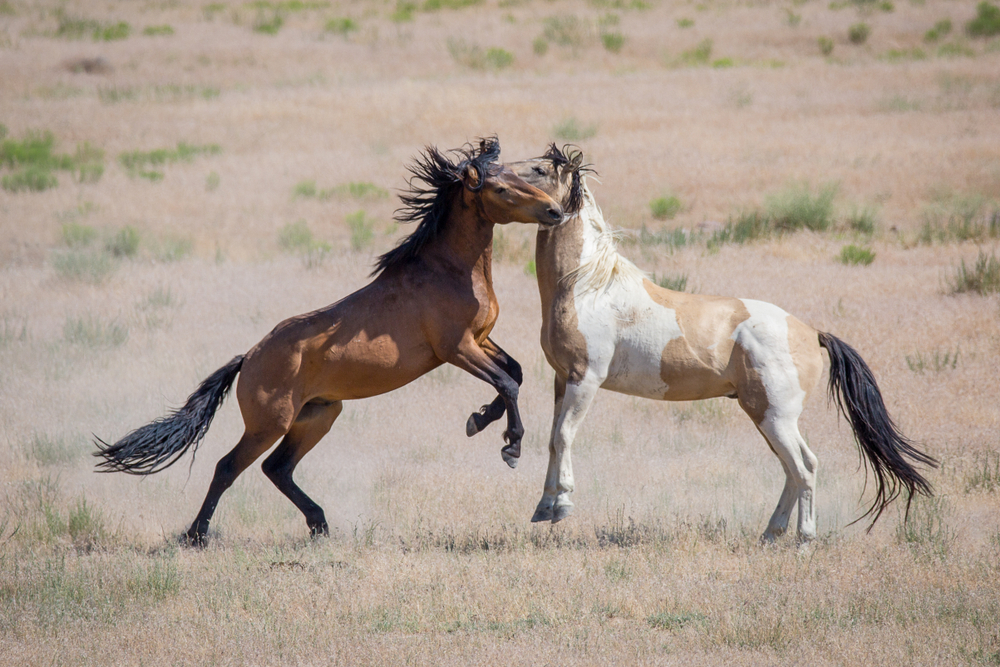
Horses are social animals, and extended isolation can affect their welfare. A horse does not need to live in a large herd to be content, but it generally needs safe, meaningful contact with other horses or—when that is not possible—carefully managed companionship and daily interaction. The right response depends on the individual horse, the reason for separation, and whether the horse can see, hear, smell, or touch a compatible companion.
Why social contact matters to horses
Living near other horses supports normal equine behavior: mutual grooming, resting near companions, following group movement, and communicating through posture, vocalizations, and scent. Social contact also gives a horse information about its surroundings. Removing that contact can make an unfamiliar environment more stressful, especially for a horse that has always lived with others.
The European Commission’s good-welfare guidance for equidae notes that horses can become anxious and insecure when isolated, and that insufficient social contact may contribute to abnormal behavior. The RSPCA likewise describes horses as social animals that need company. These principles do not mean every horse must be placed in a pasture group immediately; compatibility, fencing, health status, and safe introductions matter.
Signs a horse may be struggling with isolation
Possible signs include repeated calling, fence-walking, pacing, agitation when other horses leave, difficulty settling, reduced interest in the environment, or new stereotypic behavior such as weaving or stall-walking. Some horses become withdrawn rather than visibly frantic. A change in appetite, manure, body condition, sleep, or willingness to move can also signal a medical, pain, nutritional, or management problem—not simply loneliness.
Behavior is not a diagnosis. Have a veterinarian investigate sudden or severe changes, weight loss, recurrent diarrhea, signs of colic, lameness, or self-injury. A qualified behavior professional can help separate separation distress from pain, fear, learned behavior, or an unsuitable routine.
How to reduce isolation safely
Offer a compatible horse companion when practical
Pair or group turnout can provide the richest social opportunity, but introductions should be gradual. Start with neighboring paddocks or safe visual contact, then allow supervised interaction over a secure fence before combining horses. Avoid forcing an incompatible pair together. Feed and water in a way that reduces competition, provide enough space to move away, and inspect fences and hooves after introductions.
Use contact at a safe distance when full turnout is not possible
A horse confined for veterinary reasons, quarantine, injury, or management constraints may still benefit from seeing and hearing another horse. Adjacent stalls with safe barriers, turnout in neighboring paddocks, and calm routine interaction can be useful. Quarantine rules take priority: do not share equipment or create nose-to-nose contact with a new or sick horse until your veterinarian’s biosecurity instructions allow it.
Improve the daily environment
Regular turnout, forage-based feeding, movement, predictable handling, and opportunities to investigate the environment can reduce boredom and frustration. Human interaction is valuable, but grooming and training should supplement—not automatically replace—equine companionship. Toys or mirrors may interest some horses, while others ignore them; monitor the individual rather than assuming an enrichment item solves the underlying problem.
Can a horse live alone?
Some horses live alone without obvious distress, particularly when they have safe neighboring horses, consistent care, turnout, forage, and a suitable temperament. “Can live alone” is not the same as “does best alone.” A horse that is calm in a solitary paddock may still benefit from more social contact, while a horse that panics when separated needs a carefully designed plan rather than a sudden forced group turnout.
When moving a horse from isolation to companionship, change one variable at a time and track eating, manure, rest, movement, and behavior. If distress persists, ask your veterinarian and an experienced equine behavior professional to review the horse’s health, housing, and routine.
Frequently asked questions
Do horses get depressed when they are alone?
Isolation can contribute to stress, withdrawal, or abnormal behavior, but “depression” is not a precise diagnosis from behavior alone. Look for changes from the horse’s normal pattern and rule out pain or illness.
Is seeing another horse enough?
Visual contact is better than complete isolation for many horses, but some need closer social interaction. Safe touch or shared turnout may be appropriate only when the horses are compatible and health risks have been addressed.
How long can a horse be separated from its herd?
There is no universal safe number of hours. Veterinary treatment, quarantine, weather, housing, temperament, and the horse’s prior routine all matter. Plan the least isolating safe arrangement and monitor the horse frequently.
Should I get a second horse for companionship?
Possibly, but ownership, quarantine, compatibility, and long-term care costs must be considered. A neighboring horse, approved boarder, or safe companion arrangement may solve the social need without an impulsive purchase.
Related horse-care guides
- Can a horse live alone or do they need companions?
- How much land does a horse need?
- Can horses run themselves to death?
Sources and further reading
- European Commission: Guide to good animal welfare practice for equidae
- RSPCA Knowledgebase: Does my horse need a companion?
- RSPCA: Keeping your horse happy

Written by
Phoebe writes about horse care, health, and behavior for Equestrian Space, blending hands-on stable experience with up-to-date veterinary guidance.