
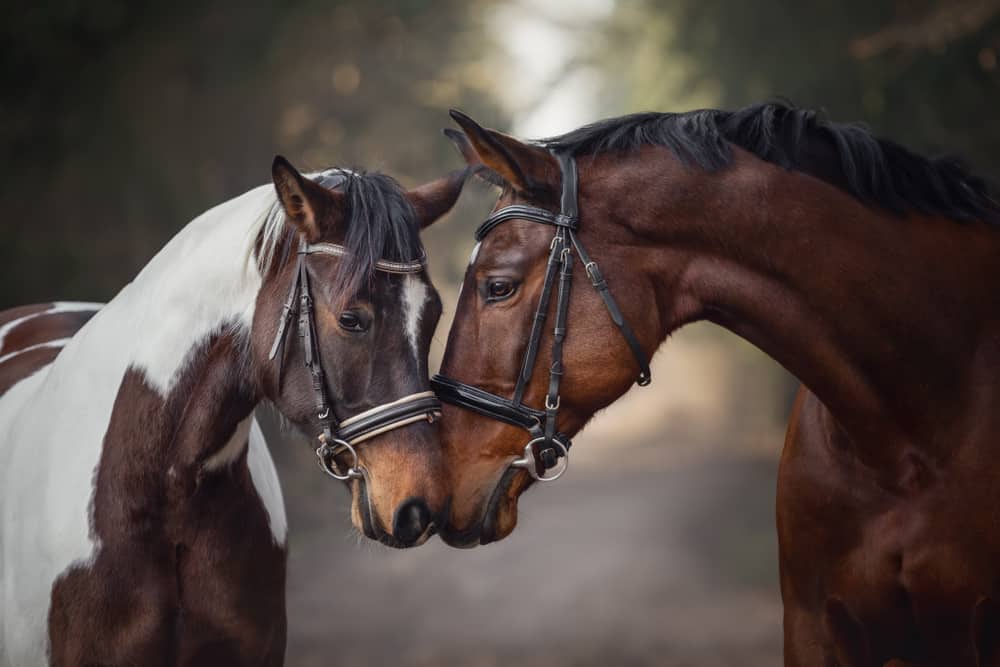
Can a horse live alone? Sometimes a horse can be managed without another horse, but that does not mean isolation is a good default. Horses are social animals, and a safe, compatible companion, regular visual contact, and predictable human care can make a major difference to welfare. The right arrangement depends on the individual horse, the property, and the health and safety of every animal involved.
Do horses need a companion?
Most horses benefit from steady social contact. A companion may provide mutual grooming, reassurance, and a more natural daily environment. A horse that lives alone is not automatically unhealthy, but long periods without meaningful contact can contribute to stress, unwanted repetitive behavior, or separation problems in some individuals.
“Companion” does not always mean another horse. A horse may form a workable relationship with a pony, donkey, or another suitable livestock species, but compatibility must be assessed rather than assumed. A fence-line neighbor is better than total isolation, yet direct contact is often more socially useful when it can be provided safely.
When might a horse be housed separately?
Temporary separation can be appropriate for quarantine, illness, injury, controlled feeding, introductions, or a genuine safety conflict. Separation should be managed as a welfare and veterinary decision, not used as a permanent shortcut. Keep the horse able to see and hear appropriate companions when possible, and maintain turnout, forage, exercise, and human interaction within the limits of the horse’s condition.
Some horses are unsafe with particular individuals because of aggression, resource guarding, injury risk, or a large size difference. In those cases, neighboring paddocks, safe shared turnout with supervision, or a carefully designed visual-contact arrangement may be preferable to forcing a dangerous pairing.
Possible companions for a horse
Another horse or pony
A compatible equine is often the simplest social match. Introduce horses gradually over a safe fence, watch feeding and turnout behavior, and provide enough space and escape routes to reduce cornering. Do not assume a quiet first meeting proves the pairing is safe; monitor the relationship through feeding, turnout, and changes in weather or routine.
Donkey, mule, or other livestock
Donkeys and other livestock can be companions in some facilities, but they have different nutritional, behavioral, and veterinary needs. A companion species can still kick, chase, transmit disease, or compete for feed. Consult a veterinarian before mixing species, especially when introducing a new animal or housing them in the same enclosure.
Goat, sheep, cow, or llama
These animals may work in individual situations, but there is no universal “best” companion. Separate feed where diets differ, avoid exposing horses to feeds or supplements intended for other species, and plan fencing, shelter, parasite control, and emergency handling for every animal. A species that is calm in one pasture may be unsuitable for another horse.
How to introduce a companion safely
- Check health first. Quarantine and obtain veterinary guidance for new arrivals, using the biosecurity practices appropriate to your area.
- Start with distance. Use adjacent paddocks or stalls where animals can see and smell one another without immediate physical contact.
- Remove competition. Provide more than one hay station, water access point, and open route when animals begin sharing space.
- Supervise the first contact. Choose a spacious, hazard-free area and watch for chasing, pinned ears, kicking, trapping, or persistent resource guarding.
- Reassess honestly. A companion arrangement is not successful if one animal is repeatedly injured, prevented from eating, or chronically distressed.
Signs a horse may be stressed by isolation
Watch for persistent calling, fence walking, weaving, unusual withdrawal, appetite changes, difficulty settling, or intense distress when another horse leaves. These signs can also indicate pain, illness, insufficient forage, or another management problem, so do not diagnose loneliness from one behavior alone. A veterinarian or qualified behavior professional can help assess the pattern.
Can a horse live alone and still be happy?
Yes, some horses cope well with individual housing when they have safe social contact, forage, movement, enrichment, and attentive care. But “can live alone” should not be treated as “should be isolated.” Before keeping a horse by itself, ask whether you can provide daily visual or physical contact with an appropriate companion, enough movement, a stable routine, and a plan for separation anxiety or emergencies.
Frequently asked questions
Is it cruel to keep one horse alone?
Not automatically, but prolonged social isolation can be a welfare concern. Individual housing should include meaningful safe contact, forage, movement, and monitoring, and should be reconsidered if the horse shows ongoing stress.
What is the best companion for a horse?
There is no universal answer. A healthy, compatible horse or pony is often a practical choice, but another species may work when temperament, diet, fencing, disease prevention, and supervision are properly managed.
Can a horse share a stall with another animal?
Do not assume shared-stall housing is safe. Differences in size, kicking risk, feed, escape options, and disease control can make it hazardous. Discuss the arrangement with your veterinarian and use an environment with adequate space and separate feeding if appropriate.
How long can a horse be left alone?
There is no safe universal time limit. A horse should not be left without routine checks, water, forage, and a plan for injury or illness. The longer a horse is separated, the more important safe social contact and regular monitoring become.
Sources and further reading
Horses are social animals, but companionship still has to be managed safely. Penn State Extension explains that horses live in groups and that understanding their social behavior is part of safe handling. Its stable-ventilation guidance also notes that open partitions can let horses see one another for companionship. These sources support the practical distinction in this guide: a horse may be housed individually when necessary, but should still have safe social contact, suitable forage and movement, and regular welfare checks.
Related horse-care guides
- Do Horses Like Humans? A Guide to Trust and Behavior
- Horses vs. Dogs: Learning and Behavior Compared
- What Do Horses Eat? A Practical Feeding Guide
- Horse Living Environments and Management

Written by
I've been around horses since I was 6 years old and started competing at the age of 9. Horses are my greatest passion and I am thrilled to be able to share my 23 (and counting) years of experience and knowledge with you.
Your article helped me a lot, is there any more related content? Thanks!