
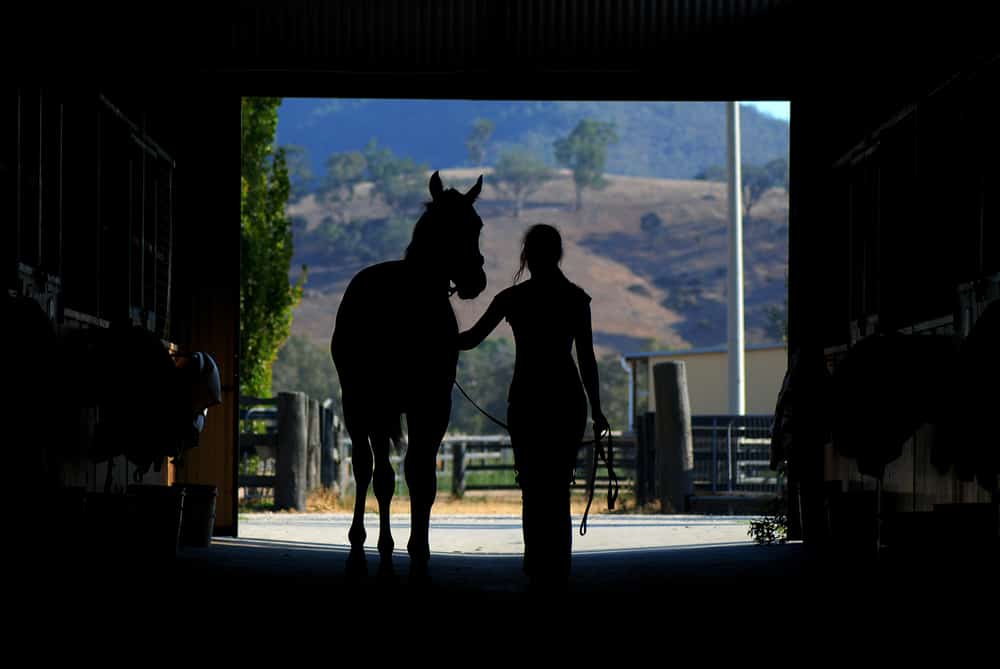
A calm barn is not just pleasant to work in. It is a safety system. Horses notice noise, traffic, footing, air quality, lighting, feeding routines, and the way people approach them. Good barn management reduces avoidable stress while making daily care more predictable for horses, staff, and owners.
What mindful barn management means
Mindful management means observing how horses respond to their surroundings and adjusting the facility or routine when a preventable source of tension appears. It does not mean keeping a barn silent or avoiding every challenge. It means using consistent handling, sound facility practices, and horse-centered observation to support normal behavior.
- Keep feeding, turnout, exercise, and stall checks as consistent as practical.
- Look for changes in appetite, manure, posture, movement, and social behavior.
- Reduce hazards before asking a horse to cope with them.
- Train every person who handles horses to use the same basic safety cues.
Start with a horse’s view of the barn
Walk through the facility at the horse’s eye level. Check whether a horse can see approaching people, whether doors and gates swing into traffic, and whether corners create blind spots. Keep aisles clear, store tools securely, and separate feed preparation from manure handling. A wide, uncluttered aisle is easier to evacuate and reduces the chance that a loose horse or startled handler meets an obstacle.
Stalls should provide secure footing, safe partitions, adequate ventilation, and enough visual contact for the horse to remain socially connected without being able to reach a neighbor aggressively. Repair protruding nails, broken boards, sharp edges, loose latches, and damaged stall fronts promptly.
Control noise, dust, and air quality
Sudden noise is not the only problem. Repeated machinery, banging doors, fans, barking dogs, and rushed activity can make a barn harder to predict. Schedule noisy maintenance away from feeding and rest periods when possible, and give horses a clear escape route during repairs.
Ventilation should exchange stale air without creating drafts directly on wet or resting horses. Keep hay and bedding as low-dust as possible, avoid sweeping dry aisles when horses are present, and address visible mold or persistent ammonia odors rather than masking them. If a horse coughs, has nasal discharge, or shows breathing difficulty, involve a veterinarian; barn design is not a substitute for diagnosis.
Make flooring and drainage part of welfare
Wet, slick, or uneven surfaces increase the effort required for every turn, step, and transition. Inspect stall floors, wash racks, aisle crossings, and entryways after rain and cleaning. Water should drain away from stalls and high-traffic areas instead of pooling beneath bedding.
In stalls, a properly fitted rubber mat can provide a more consistent, resilient surface and reduce the amount of bedding needed, but it must be installed over a suitable, reasonably level base. Mats are not a drainage system: slope, subfloor preparation, seams, and cleaning still matter. For facility owners comparing options, Treadall horse stall mats are one product category to evaluate alongside fit, traction, thickness, odor control, and long-term maintenance.
For related facility planning, see our guides to safe horse-facility design, barn air quality, and surface choices and equine biomechanics.
Use predictable daily routines
Write down the barn’s core routine so it does not depend on one experienced person. Include feeding checks, water checks, turnout order, medication, stall cleaning, equipment inspection, and emergency contacts. Predictability helps horses, but flexibility matters when weather, illness, or footing conditions make the normal plan unsafe.
Feed changes should be gradual and made with veterinary or nutrition-professional guidance when appropriate. Horses should have access to clean water, and managers should check buckets, automatic waterers, and heated lines rather than assuming they work. Turnout and forage opportunities support movement and reduce long periods of inactivity, subject to each horse’s health and management plan.
Handle horses calmly and consistently
Approach where the horse can see you, announce yourself in tight spaces, and avoid tying a horse where a gate, tractor, or delivery route passes. Use clear, repeatable cues. If a horse suddenly becomes difficult to lead, load, groom, or stand for, check pain, tack, footing, vision, and other physical causes before labeling the behavior as disobedience.
Staff should know when to stop and ask for help. A calm pause is safer than escalating pressure in a confined area. Record unusual behavior and share it with the owner and veterinarian when it persists or is accompanied by appetite, movement, respiratory, or manure changes.
A weekly low-stress barn safety audit
- Test gates, stall latches, cross-ties, aisle doors, and emergency exits.
- Walk every high-traffic surface and mark slick, loose, soft, or pooled areas.
- Check water, feed storage, hay dust, bedding, and ammonia odor.
- Inspect stall walls, mats, fasteners, fans, lights, and electrical cords.
- Review turnout groups, new-horse introductions, and escape routes.
- Ask staff what felt unsafe or inefficient during the week, then document the fix.
Frequently asked questions
How do I make a barn less stressful for a horse?
Begin with predictable routines, adequate forage and water, safe footing, good ventilation, social visibility, and calm handling. Investigate pain or illness when behavior changes suddenly.
Does a quiet barn always mean a calm barn?
No. A calm barn is predictable and safe, not necessarily silent. Horses also need normal movement, social contact, and appropriate activity.
Are stall mats enough to fix a wet stall?
No. Mats can improve the walking surface, but drainage, subfloor slope, seams, bedding, and cleaning determine whether moisture remains a problem.
How often should a barn be safety-checked?
Do a quick hazard check every day and a documented, more thorough inspection at least weekly. Recheck after storms, repairs, or moving equipment.
Sources and further reading
- University of Minnesota Extension: Horse care and management
- Penn State Extension: Horse facilities and management
- American Association of Equine Practitioners: Horse health resources
Mindful barn management is practical risk reduction: observe the horse, maintain the facility, standardize the routine, and correct small hazards before they become emergencies.

Written by
Phoebe writes about horse care, health, and behavior for Equestrian Space, blending hands-on stable experience with up-to-date veterinary guidance.