
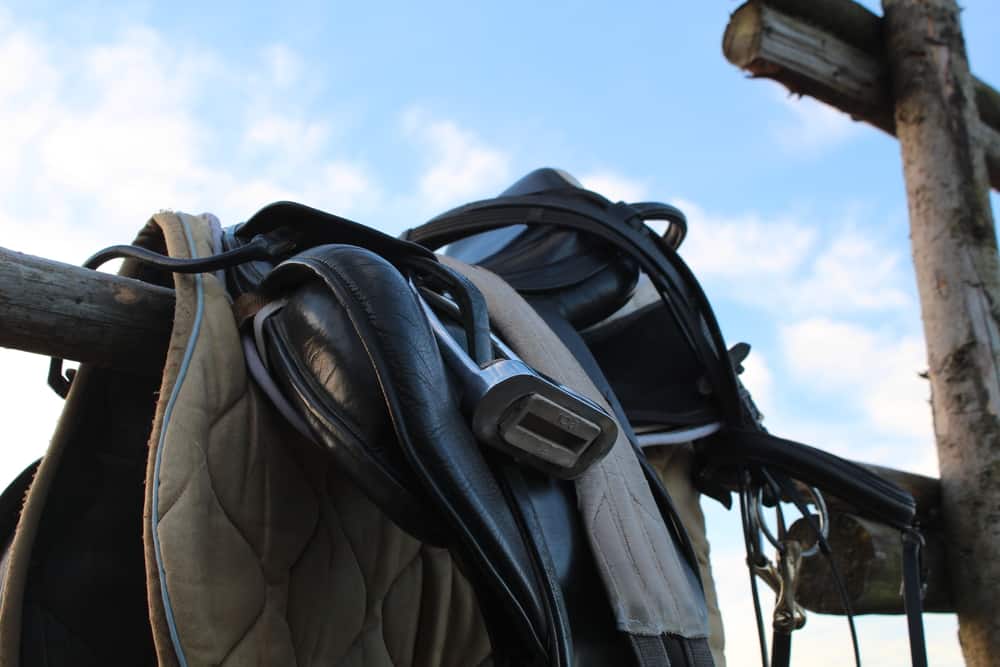
Western and English saddles are not simply two versions of the same design. Each is built around different riding positions, equipment systems, and jobs. A ranch or trail rider may value stability, comfort, and a horn; a dressage or show-jumping rider needs a saddle that supports a different leg position and leaves the horse’s shoulders free. Neither style is automatically better. The right choice depends on the discipline, the horse’s back, the rider, and the quality of the fit.
Western vs. English saddles: the quick comparison
| Feature | Western saddle | English saddle |
|---|---|---|
| Typical use | Ranch work, trail riding, reining, cutting, roping, western pleasure, and barrel racing | Dressage, show jumping, eventing, hunting, saddle seat, racing, and general-purpose riding |
| Shape and weight | Usually broader and heavier, with skirts and a horn | Usually lighter and more streamlined, with panels and no horn |
| Rider connection | Deep seat, fenders, and western stirrups | Closer leg contact, adjustable stirrup leathers, and discipline-specific flaps |
| Girth system | Western cinch, sometimes with front and flank cinches | English girth attached to billets |
These are useful generalizations, not rules. Endurance, ranch, working-equitation, and specialty saddles can borrow features from both traditions. Always judge the individual saddle rather than assuming its label tells you everything about fit or function.
What is a Western saddle used for?
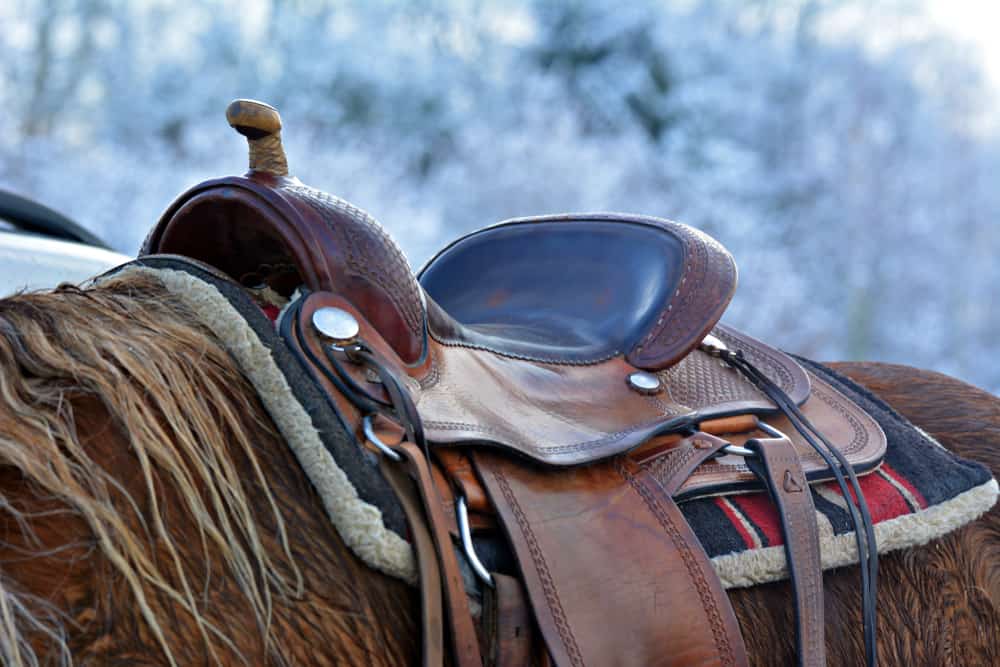
Western saddles developed around the needs of ranch work and are now used in many disciplines. The horn can provide a practical point for handling a rope, although a horn does not make a saddle suitable for every roping job. Broad skirts and a stable seat may be useful on long rides, while the fenders and stirrups support a different lower-leg position from an English saddle.
Common western disciplines include ranch riding, trail and pleasure riding, reining, cutting, roping, barrel racing, western horsemanship, and western performance classes. Designs vary: a roping saddle, cutting saddle, barrel saddle, ranch saddle, and trail saddle all prioritize different combinations of security, freedom of movement, and rider balance.
What is an English saddle used for?
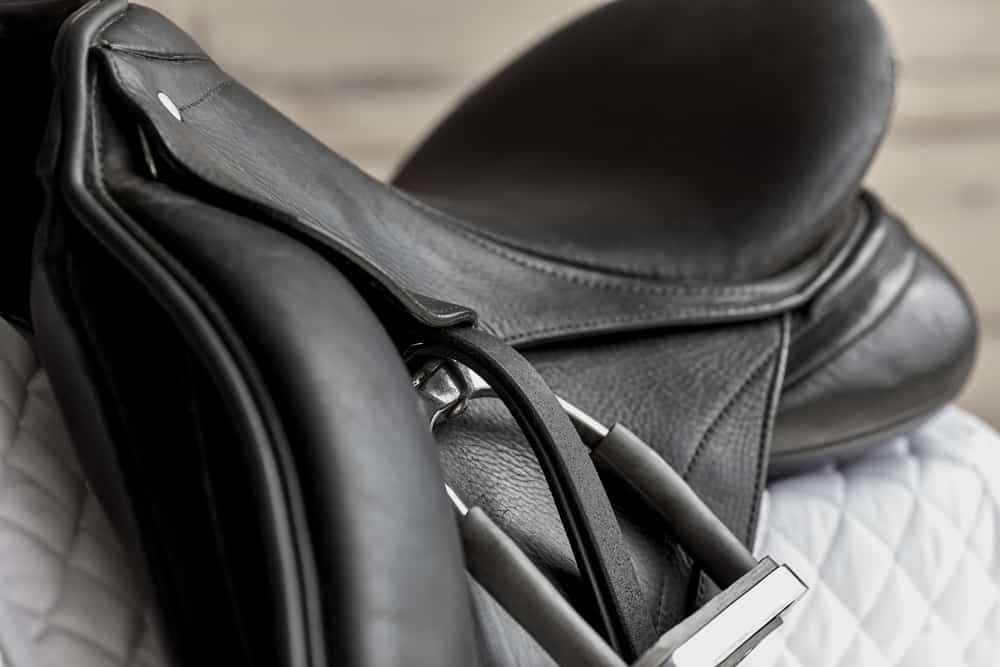
English saddles are used across dressage, show jumping, eventing, hunting, general-purpose riding, saddle seat, racing, and other disciplines. A dressage saddle typically supports a longer, straighter leg; a jumping saddle generally has a more forward flap and a seat that supports the jumping position; and a general-purpose saddle sits between those extremes.
English saddles use panels under the tree to distribute contact over the horse’s back. The saddle is secured with an English girth attached to billets, and the rider uses stirrup leathers rather than western fenders. The differences affect balance and communication, but they do not remove the need for careful fitting.
Key design differences
Seat, horn, and rider position
Western saddles normally have a horn, larger skirts, a cantle, and fenders. The seat may feel more surrounding, but a deep-looking seat is not a substitute for correct balance. English saddles expose more of the horse’s sides and use a shaped seat, knee rolls, and discipline-specific flaps to support the rider’s position.
Tree, panels, and weight distribution
Both styles can have a tree, but the construction and fit standards vary widely among manufacturers. An English saddle’s panels should provide even, appropriate contact without restricting the spine or shoulder. A Western saddle’s bars should sit evenly and allow the horse to move freely. More padding is not a reliable fix for a poor fit: lumpy, dirty, or excessive pads can create new pressure problems.
Girths, cinches, and stability
A western saddle may use a front cinch and, for some work, a correctly fitted flank cinch connected with a strap. An English saddle uses a girth attached to billets. Tightening any girth or cinch beyond what is needed for a secure, comfortable fit can cause discomfort; it should never be used to compensate for a saddle that rocks or does not fit.
How to choose between a Western and English saddle
- Start with the activity. Choose the discipline and the position you need to practice, not the style that looks most familiar.
- Fit the horse first. The saddle must suit the horse’s back, wither shape, shoulder movement, and current condition.
- Fit the rider as well. The seat size, flap or fender position, stirrup length, and balance should let the rider sit without bracing.
- Check the complete setup. Include the girth or cinch, pad, breastcollar, crupper, and any other equipment used for the discipline.
- Use a qualified saddle fitter when possible. Horses change shape with age, workload, weight, and muscle development, so a saddle that fitted last year may not fit today.
Signs the saddle needs attention
Uneven sweat or dirt patterns, dry spots, rubbing, repeated resistance to saddling, bucking, shortened stride, reluctance to move forward, and soreness after riding can all justify a saddle-fit review. These signs are not proof that the saddle is the only cause, so involve a veterinarian or qualified professional when pain, lameness, or a sudden behavior change is present.
Frequently asked questions
Can a horse use both Western and English saddles?
Yes, many horses and riders cross-train. Each saddle still needs to fit independently, and the horse should be introduced gradually to the different balance, weight, and rider position.
Is a Western saddle more comfortable than an English saddle?
Comfort depends on fit, design, condition, and the job being done. A heavier Western saddle is not automatically more comfortable, and a lightweight English saddle is not automatically less supportive.
Can I use a Western saddle for jumping?
Only use equipment appropriate for the activity and the horse’s training. A standard Western saddle is not a substitute for a correctly fitted jumping saddle, particularly where the saddle’s balance or security could interfere with the horse and rider.
How often should saddle fit be checked?
Have fit checked whenever the horse changes shape, workload, or behavior, and at regular intervals even when everything appears normal. The British Horse Society notes that weight, fitness, and muscle development can change a horse’s shape throughout the year.
Related EquestrianSpace guides
- How to Choose the Right Stirrups
- Best Horse Breeds for Western Riding
- Best Horse Breeds for English Riding
- Can You Switch a Horse from English to Western?
- Which Stirrups Are Best for Dressage?
Sources
- The British Horse Society: Saddle Fit
- AAEP: Evaluating a Saddle as a Potential Cause of Back Pain
- US Equestrian: Western
- University of Minnesota Extension: Weight-Carrying Capacity Guidelines

Written by
I've been around horses since I was 6 years old and started competing at the age of 9. Horses are my greatest passion and I am thrilled to be able to share my 23 (and counting) years of experience and knowledge with you.