
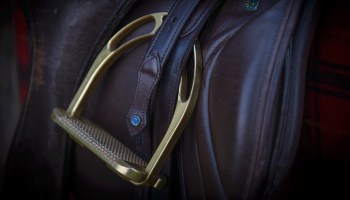
Choosing the right stirrups is less about finding a universally “best” model and more about matching the stirrup to your discipline, footwear, balance, and any comfort or mobility concerns. A secure footbed, an appropriate width, a sensible safety feature, and correct adjustment matter more than a fashionable brand name.
What to look for when choosing stirrups
Start with four questions: What do you ride? What boots will you wear? Do you need extra release protection? And are you trying to reduce pressure through your knees, ankles, or hips?
- Discipline: Jumping, dressage, trail riding, and general schooling place different demands on the rider’s leg position and stirrup.
- Footbed: A wide, stable tread can make it easier to keep the foot level. Serrated, rubber, or grippy surfaces help prevent the boot from sliding, but should not encourage the rider to jam the foot down.
- Safety design: Peacock-style release arms, breakaway systems, and flexible or jointed designs can reduce the chance of a trapped foot. They are not a substitute for correctly fitted boots, supervision, or a helmet.
- Size: The stirrup should accommodate the rider’s boot without allowing the foot to slide completely through. Check the manufacturer’s sizing guidance rather than relying on a visual guess.
- Weight and balance: A heavier stirrup may hang predictably, while a lighter model can feel less noticeable. Neither is automatically safer or more comfortable for every rider.
Best stirrups by riding discipline
Best for general riding and trail riding
For everyday schooling and trail use, prioritize a durable, uncomplicated stirrup with a secure tread and enough room for your boot. A traditional stainless-steel model is easy to inspect and maintain. Riders who spend long hours in the saddle may prefer a wider footbed or a shock-absorbing insert, especially if a rigid tread aggravates the ankle.
Trail riders should also consider visibility and release. A safety stirrup can be a sensible choice when riding alone, on uneven ground, or with a less experienced rider, but inspect the release mechanism regularly. Mud, packed dirt, worn elastics, and damaged hardware can prevent a safety feature from working as intended.
Best for show jumping and eventing
Jumping stirrups should support a secure, consistent base while allowing the rider to keep the heel lower and the ankle flexible. Many jumping riders choose a wide tread, an angled or shock-absorbing footbed, or a design with a visible release feature. The right choice depends on whether the rider tends to lose the stirrup, braces against the tread, or experiences ankle and knee discomfort.
Do not choose a stirrup solely because it is advertised as “safety” or “joint-friendly.” Practice with the model at home before using it in competition, and confirm that its dimensions and safety mechanism comply with the rules of the relevant organization and class. The U.S. Equestrian Federation rule book is the appropriate place to check current competition requirements.
Best for dressage
Dressage riders generally want a clean, stable platform that does not distract from a long, quiet leg. A conventional stirrup with a moderate-width tread works well for many riders. A flexible or shock-absorbing design may be useful when it allows the ankle to move naturally, but excessive movement can make the rider feel less stable.
Choose a shape that lets the ball of the foot rest comfortably without forcing the toes inward or outward. If the stirrup constantly twists, catches the boot, or makes the knee turn away from the saddle, the issue may be the stirrup, the boot, the saddle fit, or the rider’s position—not simply a need for a more expensive model.
Best for young or beginner riders
For children and beginners, simplicity and release protection usually matter more than advanced materials. A correctly sized safety stirrup, a secure tread, and a properly fitted riding boot are a strong starting point. An instructor should check that the rider’s foot is positioned at the ball of the foot and that the boot cannot pass through the stirrup.
Parents should inspect safety stirrups before every lesson. Replace worn elastic bands, cracked joints, bent branches, or damaged attachment points immediately. A safety mechanism that has been altered, taped, or fitted with an incorrect replacement part should not be trusted.
Stirrups for knee, ankle, or hip discomfort
If riding causes pain, first rule out saddle fit, stirrup length, boot stiffness, and training or medical issues. A stirrup with a wider platform, slight articulation, or shock absorption can reduce the feeling of impact for some riders, but it cannot correct a saddle that puts the leg in the wrong position.
Try any comfort-focused stirrup in short sessions. Pay attention to whether the knee stays aligned with the hip and ankle, whether the heel can remain relaxed, and whether the rider feels more stable rather than simply more supported. Stop riding and seek qualified medical advice for persistent, worsening, or sharp pain. Our guide to stirrups for knee and ankle pain covers comfort features in more detail.
How wide should a stirrup be?
The rider’s boot should sit comfortably on the footbed with a small margin on either side, while the boot’s sole and heel prevent the foot from sliding through. Too narrow can create pressure and make balance difficult; too wide can allow the boot to move excessively. Measure the boot you actually ride in and compare it with the manufacturer’s internal width, not just the advertised outside width.
How to set and test a new pair
- Check every branch, hinge, tread, fastener, and attachment point before mounting.
- Fit the stirrups to the boots you will use, not casual shoes.
- Begin with your normal length, then adjust evenly while mounted with an instructor or experienced observer.
- Walk, halt, post, and ride transitions before jumping or going on a long trail.
- Confirm that the foot stays on the ball of the foot and that the stirrup does not twist or catch.
- Recheck the hardware after the first few rides and follow the manufacturer’s maintenance instructions.
For more foundational guidance, see our explainers on dressage riding, horse jumping obstacles, and show-jumping safety.
Frequently asked questions
Are safety stirrups safer than regular stirrups?
They can reduce the risk of a trapped foot by allowing a release in a fall, but no stirrup eliminates risk. The mechanism must be correctly fitted, maintained, and permitted for the intended use.
Are wide-footbed stirrups better?
A wide footbed can improve perceived stability and comfort for some riders. It is only better if the rider’s boot fits securely and the platform supports a neutral, relaxed leg.
What stirrups are best for beginners?
A correctly sized, durable stirrup with a secure tread and an appropriate safety-release design is a practical choice. An instructor should confirm fit and position before the rider uses it independently.
How often should stirrups be replaced?
Replace them when they are cracked, bent, corroded, excessively worn, or no longer operate as designed. There is no universal replacement interval, so inspect them before every ride and follow the manufacturer’s guidance.
Bottom line
The best stirrups are the ones that fit your boots, support a balanced leg, suit your riding discipline, and remain reliable under real use. Choose safety and fit first, test the design gradually, and treat persistent pain as a reason to evaluate the whole riding setup—not simply to buy another pair of stirrups.
Sources: U.S. Equestrian Federation rule book; British Horse Society riding safety guidance.

Written by
I've been around horses since I was 6 years old and started competing at the age of 9. Horses are my greatest passion and I am thrilled to be able to share my 23 (and counting) years of experience and knowledge with you.