
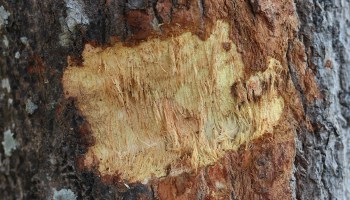

As fun as it is owning a bunch of horses, they sometimes get naughty and develop behaviors that can end up destroying the environment you keep them in. After one of my horses started stripping all the bark off the trees, I decided to research the subject and write this post based on my findings to help anyone else who might be experiencing the same thing with their horse. So why do horses eat bark off trees?
Horses mainly eat bark off trees which are either due to dietary inadequacies, boredom or from adopting a bad habit. It is usually harmless for horses to eat bark off trees, depending on the tree, and aside from bad habits, the behavior can be fixed without much trouble.
If your horse is eating bark off trees, then you definitely want to read the rest of this article to learn more about the exact reasons why they are doing so, how to fix the problem, and also to learn which trees are safe and which are not safe for horses to avoid anything bad happening to your horse.
Reasons why horses eat bark off trees
I spent many long hours researching everything there is to know about my horse was eating bark off trees, and the overall results can be broken down to three core reasons:
Dietary inadequacies
In a few instances, a lack of vitamins or essential minerals may compel your horse to eat bark or chew on wood. Ask your veterinarian to submit a blood sample to a qualified medical laboratory for a comprehensive mineral test. This will identify or eliminate any inadequacy in your horses’ diet. In addition, she may also recommend placing a salt or mineral block in the paddock or pasture as a precaution. Therefore, in the majority of cases, plain and simple boredom is the real cause of this burgeoning habit.
Boredom
Bored horses often exhibit compulsive behavior such as stripping bark off trees or even “cribbing,” which is a habit where they continually bite down on available ledges such as fence rails or a dividing barrier. Horses are social animals and crave companionship. Entertain your horse by introducing at least one pasture mate if possible, or perhaps provide him with a Horse Ball toy to play with and occupy his time.
Habit
Bad habits in animals or humans are equally hard to break. Initial positive feedback from reducing boredom or dietary deficiencies by eating wood will encourage your horse to continue the practice until the habit is set in stone. However, even when preventive actions are taken to correct the issue, your horse will probably keep on trying to access wood and tree bark.
How do you keep horses from eating bark off trees?
If the trees in your pasture looked anything like mine after my horses went through them, then you’d also want to know how to fix the problem sooner rather than later.
Here are some tips of how to keep your horse from eating bark off trees:
- Provide plenty of long-stem forage, such as good quality alfalfa hay.
- String a line of electrical ‘hot wire’ a few feet from the inside perimeter of the paddock or pasture fence.
- Cover accessible tree trunks and wooden railings in the paddock or pasture with PVC.
- Treat all the wood within your horses’ reach with a commercially available harmless unappetizing substance.
- Introduce a training program and step up trail rides to drain off your horses’ excess energy.
- Reduce boredom by using a slow feeder to make hay meals last longer.

What are horses lacking when they eat wood
Tree bark contains many valuable nutrients, and as mentioned earlier, a nutrient deficiency could be the reason why they are eating the bark off the trees. If something is lacking in your horse’s diet, your veterinarian’s blood mineral test will usually identify the deficiency and prompt your vet to take corrective action.
What nutrients are in tree bark?
Tree bark contains many nutrients such as:
- Digestible starches
- A small amounts of Sugar
- Some vitamins
- Some minerals
- And lots of fiber
In addition, the bark contains up to 600 calories per pound, depending on tree species and types of soil.
What trees are bad for horses
At first glance, the number of poisonous trees and shrubs available poses a huge obstacle to the horse population growth. However, many naturists believe that evolutionary experience and hand-down memory may have taught horses to instinctively avoid eating poisonous plants.
Here is a list of trees that are bad for horses and should be avoided at all times when it comes to your horse:
| Name | Prefered Habitat | Tree type | Trunk | Branches | Leaves | Flowers | Fruit |
| Black Locust | Moist Soils | Shrub/Tree up to 70 Ft High | Usually Straight | Smooth with Sharp Thorns | 9 to 19 leaflets 3 – 4 cm long | White, or pink | Clusters of Brown Pods |
| Black Walnut | Acidic moist soil | Shrub/Tree up to 150’ tall | Usually Straight | Round low branches | 15 – 23 leaflets | Unisex, Yellow or red | 1-3 nut seeded capsules |
| Horse Chestnut | Moist, well-drained soil | Tree 50’-75’ high | Upright-oval rounded form | Lower branches hang down | Light to dark green | Large clusters white, base yellow/red tint | Conker, shiny brown poisonous seed |
| Gamble’s Oak | Sandy soil | Shrub/small tree 15’-20’ high | Irregular | Irregular and crooked | Lobed dark green glossy leaves | Inconspicuous unisexual catkins | Edible after tanic acid removed |
| Oleander | All types of soil | Shrub/small tree up to 25’ tall | Multi-trunk | Straight | leathery lance-shaped | Clusters of red, pink, yellow or white flowers | Capsules/large number of fluffy seeds |
| Red Maple | Acid soil | Tree heights of 70-100ft | 60” diameter free of branches for some distance | Lower branches sweep upward. | Toothed with 3-5 shallow lobes. | Small, hanging clusters of bright red flowers | wings spreading at narrow angles |
| Yew | Humid Chalky acidic soil | Shrubs or small trees 33’ to 65’ tall | Gnarled appearance with trunk diameters reaching 4 meters | Dense, shrubby appearance | Glossy, rigid, dark green, linear leaves | Inconspicuous axillary male and female flowers | Red to yellow fruits (aril) containing a single seed. |
What trees are safe for horse pastures?
Apart from the above list of harmful trees, stripping bark from other trees normally does not harm horses.
Conclusion
Now that we’ve covered the 3 main reasons why your horse might be eating bark off trees, briefly mentioned a solution to each, covered a few tips of how to stop them from doing so, and touched on the trees that are bad for horses and should be avoided, hopefully, we could answer all the questions you had and get you on the path of solving the issue for your horse.
Just remember the golden rule with horses, especially if they’ve already formed the habit, patience. Be patient, be persistent in your actions, and hopefully, your trees will be back to looking like they did before in no time.
Related Guides
If you found this helpful, these related articles cover more ground:
- Uncovering Rare Horse Breeds: Preserving Endangered Equines
- Decoding Your Horse’s Emotional Expressions
- 5 Features to Look for in High-Quality Horse Mats (2026 Guide)
- The Crucial Role of Regular Exercise in Maintaining Horse Health
- How to Choose the Right Thickness for Horse Stall Mats (2026 Guide)
Frequently asked questions about horses eating tree bark
Is it normal for a horse to eat tree bark?
Occasional browsing may be normal, but persistent bark stripping deserves attention. Check forage access, boredom, turnout, dental health, and the specific tree species rather than assuming the behavior is harmless.
Can eating tree bark make a horse sick?
Yes. Risk depends on the species, the amount eaten, and the part of the plant. Some trees and ornamental plants are toxic to horses, so remove access to unknown or hazardous trees and contact a veterinarian promptly if a horse shows colic, weakness, neurologic signs, breathing trouble, or other illness.
How do I stop my horse from stripping bark?
Provide adequate forage, increase safe movement and enrichment, protect trunks with a horse-safe barrier, and have a veterinarian or equine nutrition professional review the diet if the behavior is persistent. Do not rely on a homemade coating unless it is confirmed safe for horses.
Which trees are safe for horses?
Do not identify a tree by common name alone. Confirm the species locally with an extension specialist or veterinarian and consult a current equine toxic-plant reference before allowing access. When identification is uncertain, fence the horse away from the tree.
Sources and Further Reading
For additional guidance on tree and forage hazards, consult these veterinary and extension resources:
- University of Minnesota Extension: Plants deadly to horses
- University of Minnesota Extension: Black walnut and horse toxicity
- MSD Veterinary Manual: Behavior problems of horses
Tree safety depends on the species, the part of the plant, and how much a horse consumes. When a horse is eating unfamiliar trees or shows signs of illness, identify the plant and contact an equine veterinarian or poison-control resource rather than relying on a generic safe-tree list.

Written by
I've been around horses since I was 6 years old and started competing at the age of 9. Horses are my greatest passion and I am thrilled to be able to share my 23 (and counting) years of experience and knowledge with you.