4 Ways to Help a Horse That Won’t Lunge (2026 Training Guide)
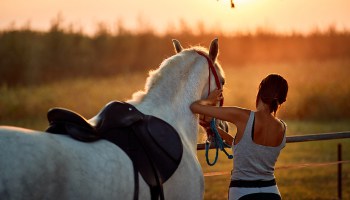
Learn why a horse refuses to lunge and how to rebuild the skill safely with in-hand basics, clear cues, a large circle, short sessions, and professional support when needed.
Practical horse care, facility management, and riding knowledge — written for owners who want to do right by their horses.
Explore the BlogShop Horse MatsLearn why a horse refuses to lunge and how to rebuild the skill safely with in-hand basics, clear cues, a large circle, short sessions, and professional support when needed.
Horses are social beings who rely on body language and physical touch to communicate with each other and people. Most horses, especially youngsters, will attempt to interact with people in the same way that they would interact with other horses in their social group, making physical contact such as nudging and even nipping a common … Read more
Riding a 500 kg animal with a will of its own can be unpredictable at full speed, and steering them to jump over high fences can be very dangerous. There are around 60 000 horse-related injuries every year. So is showjumping dangerous? Showjumping is one of the most dangerous horse sports and has many risks involved. … Read more
Many riders are under the impression that you need a big fancy warmblood to perform dressage. This simply is not true. After all, dressage training’s main purpose is to develop a horse’s strength, suppleness, balance, and responsiveness to the rider’s aids, therefore displaying a harmonious partnership between a horse and his rider. Most classic draft … Read more
A horse may rub its head on you for a scratch, an itch, curiosity, or learned attention-seeking. Learn how to read the behavior safely and when to investigate discomfort.
Have you ever marveled at the dancing horses? Felt the magic of something bigger, something transcendent? I have. It’s there every time I swing into a saddle. It’s in every moment of harmony between my horse and me. While not a true lateral movement, leg-yield is used to teach a horse about moving sideways from … Read more
Most horses are no longer used as utility animals; instead, they are partnered with hobbyists, amateur enthusiasts, and dedicated professional athletes, a far cry from the original farm horse or war mount. As the function of the horse has changed, the equestrian dress code has evolved. Much of equestrianism is based on tradition. Horsemanship methods … Read more
Showjumping is a thrilling, fast-paced technical display of horsemanship and physical athleticism from both horse and rider. The tack a rider chooses to train and ride his horse in can profoundly impact the quality and finesse of a showjumping round. The bit or lack of a bit can be the deciding factor between a winning … Read more
Are you looking to start horse riding? Maybe you have started lessons and are now looking to take your horse-riding career further. Horse riding can be an incredibly fun hobby or a serious career. Whatever your choice, the basic skills for horse riding remain the same. You also need to be prepared for the financial … Read more
Blinders go by many names and may be interchangeably referred to as blinders, blinkers, winkers, or even shadow rolls. Blinders may be somewhat of a misnomer; the blinders do not blind a horse but rather restrict its field of vision. Traditionally blinders have been used extensively in carriage driving and racing. Blinders are headgear used … Read more
There are many things that make affiliated (graded) shows different from non-affiliated (training shows). The most important difference is what it allows the riders to do and not to do. Affiliated shows are more serious and held up to an international standard, whereas unaffiliated shows are more relaxed, local and used for training or sometimes … Read more
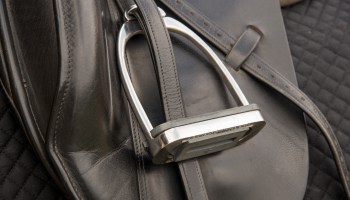
Compare the best stirrups for knee and ankle pain, including flexible, shock-absorbing, pivoting, and wide-footbed designs—plus fit, length, and safety guidance.