
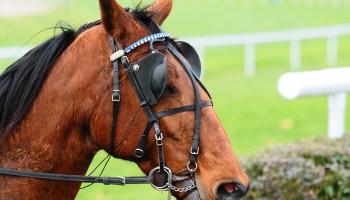
Horse blinders, also called blinkers, are pieces of tack attached to a bridle or driving harness that limit some side and rearward vision. They do not make a horse see better, and they are not automatically appropriate for every horse. Their usefulness depends on the discipline, the individual horse, fit, acclimation, and the handler’s safety plan.
What Do Horse Blinders Do?
Blinders reduce the visual information arriving from the sides while leaving the horse able to see forward. In driving, racing, and some training situations, that narrower view can reduce distractions from wheels, neighboring horses, spectators, or movement beside the horse. It may help a horse stay oriented to the line of travel, but it also removes information the horse might otherwise use to notice people, vehicles, and hazards.
That tradeoff matters: a horse wearing blinders may startle at a sound or object it cannot see. Blinders should therefore be treated as specific equipment for a specific job—not as a cure for spooking, anxiety, rushing, or poor training.
Why Do Horses Wear Blinders?
- Focus: limiting peripheral visual distractions can help some horses stay on a planned route.
- Consistency: in a busy race or driving environment, reducing sudden movement at the side may make the visual scene more predictable.
- Tradition and rules: racing and driving practices may permit or commonly use blinkers, while other disciplines do not. Check the current rules for the event or organization.
- Individual management: a trainer may use a particular style temporarily, with a clear reason and monitoring plan.
Blinders in Driving and Racing
Driving horses may encounter wheels, traces, vehicles, other turnouts, and people moving close to the horse’s side or behind it. A properly selected blinker can reduce visual clutter, but it does not replace competent handling, a safe harness, or a gradual training program. The FEI’s combined-driving guide describes driving as a structured sport with dressage, marathon, and cones phases; equipment choices should be evaluated in the context of the specific discipline and its current rules.
Race blinkers also come in different shapes and degrees of restriction. A horse that relaxes with a small amount of visual limitation may become anxious with a more restrictive cup. The goal is not to block as much vision as possible. It is to use the least restrictive setup that serves a documented training or competition purpose.
Can Blinders Make a Horse Safer?
Sometimes limiting distractions may support safer forward movement, but blinders are not a universal safety device. They can also increase the chance of a startle if something approaches from outside the horse’s remaining view. Before using them, address pain, bridle or harness fit, vision problems, training gaps, and the environment. If a horse develops sudden spooking, head-shaking, bumping into objects, squinting, tearing, or other signs of eye discomfort, stop changing tack and arrange a veterinary assessment. The AAEP’s eye-condition guidance is a useful reminder that behavior changes can accompany painful or vision-threatening eye disease.
Do All Horses Need Blinders?
No. Many horses work safely without them, and a calm, attentive horse may gain nothing from restricted vision. Blinders can be unsuitable when the horse needs broad visual awareness, when the handler cannot safely introduce them, or when the horse becomes more anxious, trips, freezes, hits the harness, or reacts violently. A qualified trainer or driving instructor can help decide whether they are appropriate.
How Should You Choose and Fit Blinders?
Choose a design that matches the horse’s job and the rules of the discipline. Inspect the cheekpieces, stitching, cups, and fasteners for damage. The blinders should not press on the eye, rub the face, catch the eyelashes, interfere with the ears or jaw, or shift when the horse moves. A qualified person should check the fit from the ground and while the horse is walking.
Do not assume that a tighter adjustment is safer. A poorly positioned blinker can create pressure, unexpected gaps, or a distorted view. If the horse is suddenly resistant after fitting, remove the equipment in a safe place and reassess rather than forcing the horse forward.
How Should You Introduce Blinders?
- Check the bridle, cheekpieces, stitching, and blinders for rough edges or damage.
- Have an experienced person fit them so they do not press on the eye, rub the face, obstruct breathing, or interfere with the horse’s ears and jaw.
- Let the horse inspect and wear the equipment briefly in a quiet, controlled setting before asking for demanding work.
- Walk first, then progress only if the horse remains relaxed, balanced, and responsive. Watch posture, breathing, eye comfort, and willingness to move.
- Do not rush into traffic, competition, or driving immediately after fitting new blinders. Stop and reassess if the horse panics or cannot move confidently.
When Should You Remove Them?
Remove blinders and seek experienced help if the horse rears, bolts, freezes, repeatedly trips, strikes at the tack, sweats excessively, or shows signs of eye pain. Never use blinders to conceal a horse that is unsafe, unfit, or reacting to an untreated medical problem. A tack adjustment may help, but it cannot diagnose vision loss or pain.
Authoritative sources on equine vision and driving
Blinders (also called blinkers) are management equipment, not a requirement for every horse. Their use should match the discipline, the horse’s individual response, and the welfare needs identified by the handler. For additional context, see the AAEP overview of common equine eye conditions and the FEI guide to combined driving. A horse that becomes distressed, loses coordination, or shows a sudden change in vision should be taken out of work and assessed by an appropriately qualified professional.
Horse Blinders: Frequently Asked Questions
Are blinders the same as blinkers?
In horse tack, the terms are commonly used for the same type of equipment. Regional and discipline-specific terminology varies.
Can a horse see through blinders?
Most blinders block or reduce side vision while leaving forward vision available. The amount of restriction depends on the design and fit.
Should a beginner use blinders on a horse?
A beginner should not add blinders without guidance from an experienced trainer or instructor. Restricted vision can change how a horse responds to sound and movement.
What if a horse suddenly starts spooking while wearing them?
Move to a safe controlled area, stop the session, and have the fit and the horse’s eyes and behavior evaluated. Sudden changes warrant veterinary attention rather than simply tighter or more restrictive equipment.
Related equestrian guides: Learn the skills needed for safe horse riding, review how dressage riding works, compare stirrup considerations for rider comfort, and read how to choose dressage stirrups.

Written by
I've been around horses since I was 6 years old and started competing at the age of 9. Horses are my greatest passion and I am thrilled to be able to share my 23 (and counting) years of experience and knowledge with you.