
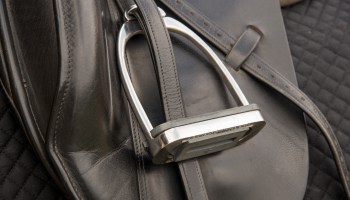
Riding with sore knees or ankles is a sign to pause and find the cause—not proof that you need a more expensive stirrup. Fit, stirrup length, saddle balance, boot support, riding technique, strength, and an existing injury can all change how force travels through your leg. The best stirrups for knee and ankle pain are the ones that fit your boot, let your foot stay balanced, and reduce unwanted movement without hiding a medical problem.
This 2026 guide compares the features worth looking for in joint-friendly stirrups, explains how to set a starting length, and reviews seven commonly considered options. Product designs and availability change, so check the manufacturer’s current specifications before buying.
What to look for in stirrups for knee and ankle pain
- A secure, correctly sized footbed: Your boot should have a small amount of room on each side, not sit jammed against the frame. A grippy tread can help prevent sliding, but it should not make it difficult to release your foot in a fall.
- Controlled shock absorption: Elastomer or flexible footbed systems may reduce vibration and impact reaching the rider. They cannot correct a poor leg position or guarantee pain relief.
- A natural alignment: A pivoting, angled, or offset eye can help some riders keep the stirrup under the balance point of the foot. It can feel wrong to another rider, so test the position gradually.
- Safety release: In jumping and cross-country, the stirrup must support safe foot release. Follow the manufacturer’s instructions and inspect hinges, elastomers, treads, and side sections regularly.
- A weight and shape you can control: A wide platform can feel stable, but a very large or heavy design may not suit a smaller boot or a rider who frequently loses the stirrup.
Before changing stirrups, check length and position
With your feet out of the irons, use the ankle bone as a starting reference: the stirrup tread should sit around that level when you are standing beside the saddle. Then refine the length for the discipline. Jumping generally uses shorter stirrups than dressage or long-distance riding, but the correct setting is the one that lets you keep a soft knee, stable lower leg, and centered foot without forcing your heel down.
Do not brace by driving your heel down or gripping with your knee. That can stiffen the leg and increase discomfort. Have an instructor watch you from the side and behind, and make only one change at a time. If pain is sharp, persistent, associated with swelling or numbness, or worsening outside the saddle, stop riding and consult a qualified medical professional.
7 stirrup options riders consider for joint comfort
1. Flex-on
Flex-on models use a wide footbed and elastomer shock-absorption system, with configuration options that vary by model. The attraction is adjustability: a rider can choose a frame, tread, and elastomer setup rather than accepting one fixed feel. That flexibility is useful when you are trying to fine-tune alignment, but it also means you should confirm that the selected configuration is appropriate for your discipline and boot.
2. Compositi Reflex
Compositi Reflex stirrups are a lighter, budget-conscious option with a wide, shock-absorbing footbed on some models. They may suit riders who want less weight and a more forgiving tread without moving to a premium metal design. Check the exact model’s dimensions and tread before buying; “Reflex” is a product family, not one universal specification.
3. Freejump AIR’S
Freejump’s AIR’S line uses the company’s shock-absorption technology and offers an eye that can be straight or angled at 30 degrees, depending on the configuration. The angled eye may help some riders find a more natural foot orientation. It is not automatically better for every ankle: introduce the angle at a walk, check that the boot remains secure, and stop if it encourages the foot to twist.
4. MDC Ultimate
MDC Ultimate stirrups use flexible side sections and an adjustable or preset top-position system, depending on the model. This design is intended to let the stirrup sit in a position that feels more natural to the rider and can reduce the urge to force the heel down. They are worth considering for riders who want adjustability, but the correct setting still depends on saddle fit, leg length, and discipline.
5. Sprenger Bow Balance
Sprenger Bow Balance is a wide-footbed safety stirrup designed to flex and pivot in multiple directions. Its shape and pivoting action may help a rider maintain a more comfortable foot position, while the safety design is intended to aid release. Use the manufacturer’s safety guidance and inspect the stirrup before each ride; no safety stirrup replaces a properly fitted boot and safe riding habits.
6. Jointed or flexible stirrups
Jointed stirrups place a flexible section between the sides and footbed. They can feel less rigid over repetitive movement and are often less expensive than highly adjustable systems. The trade-off is feel: excessive movement can be distracting or unstable for some riders. Choose a model with a durable, serviceable design and make sure the joints are not worn, cracked, or contaminated with grit.
7. Wide, supportive conventional stirrups
A conventional stirrup with a properly sized, well-maintained footbed may be all you need. Before assuming the iron is the problem, try a supportive tread, check that your boot fits, and review your stirrup length. A simple design is easier to inspect and replace, and it avoids adding movement that your leg does not tolerate.
How to choose between these options
- Start with the problem: Identify whether discomfort appears during sitting trot, jumping, long rides, mounting, or only after riding.
- Check the whole setup: Ask an instructor or saddle fitter to assess saddle balance, leg position, and stirrup length.
- Match the feature to the symptom: Try a wide platform for foot stability, shock absorption for vibration, or an angled/pivoting eye only when your alignment benefits from it.
- Prioritize safety and fit: The boot must fit the tread and release safely. Never sacrifice release for a tight-feeling grip.
- Test before committing: Borrow or demo a pair if possible. Walk, rise at the trot, sit the trot, and perform your normal work before judging them.
For related training and fit guidance, read how to choose the correct stirrups, show-jumping safety precautions, the beginner’s guide to jumping obstacles, and ways to help a horse that will not lunge.
Frequently asked questions
Are flexible stirrups better for knee pain?
They can feel more comfortable for some riders because they allow controlled movement or absorb vibration, but evidence and individual response vary. Persistent pain needs assessment rather than a product swap.
Can stirrup length cause knee or ankle pain?
Yes. Stirrups that are too short can close the knee angle, while excessive length can make you reach and lose stability. Use the ankle-bone reference as a starting point, then refine it with an instructor.
What stirrup is safest for jumping?
Choose a correctly sized stirrup with a reliable safety-release design and follow its inspection and maintenance instructions. Safety depends on the whole rider-and-tack system, not the brand name alone.
Should I ride through knee or ankle pain?
No. Stop or reduce the activity when pain is sharp, persistent, swollen, numb, or worsening. Seek medical advice for symptoms that do not settle, and have your tack and riding position checked before returning to normal work.
Sources and further reading
- AQHA stirrup safety tips
- Flex-on manufacturer information
- Freejump AIR’S manufacturer information
- MDC Ultimate manufacturer information
- Herm Sprenger stirrup information

Written by
I've been around horses since I was 6 years old and started competing at the age of 9. Horses are my greatest passion and I am thrilled to be able to share my 23 (and counting) years of experience and knowledge with you.