
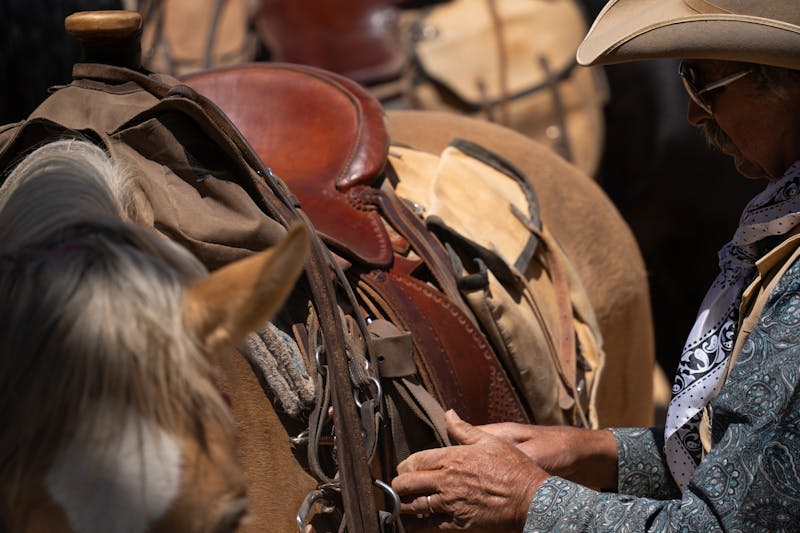
The Importance of Weight Distribution in Saddle Fitting
When it comes to horseback riding, making sure the saddle fits properly is super important for both you and your horse. It’s all about how the weight is spread out when you’re riding. If the saddle fits well, it helps distribute your weight evenly across your horse’s back. This means less discomfort and fewer chances of injury for both of you.
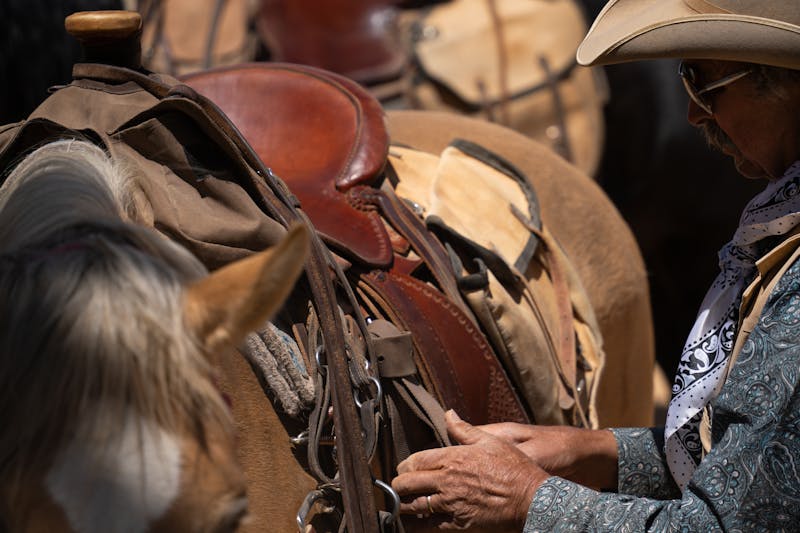
Why It Matters
Horses aren’t naturally built to carry weight for a long time. If the weight isn’t spread out well, it can cause problems like sore spots, limited movement, or even long-term health issues like muscle problems or lameness. Plus, if the saddle isn’t balanced right, it can make it hard for you to sit comfortably and stay balanced while riding.
How it Works
To understand how weight is distributed, we need to look at how a horse’s back and the saddle are designed:
- The Horse’s Back: The saddle sits mainly behind the horse’s withers, and a good fit means it shouldn’t put too much pressure on the spine or withers.
- Saddle Panels: These help spread out your weight evenly. The shape, padding, and symmetry of the panels all play a big role.
- Gullet Width: The gullet (the space under the saddle) should have enough room to avoid touching the spine, so your horse can move comfortably.
- Tree Shape and Size: The saddle tree should match the shape of your horse’s back to avoid pressure points.
Checking the Fit
To see if the saddle fits well, you can do a few things:
- Put the saddle on without any pads and make sure it sits evenly.
- Watch how the saddle stays in place when you and your horse are moving.
- You can also use tools like pressure pads to see where the weight is distributed.
- Common Issues and Fixes
Bridging: When there are gaps in the middle of the saddle.
Solution: Adjust the padding or get a saddle that fits better.
Rocking: The saddle moves too much front to back.
Solution: Use a saddle that matches your horse’s back shape.
Pinching: When the saddle is too narrow and puts pressure on the withers.
Solution: Try a wider tree or a saddle with adjustable parts.
Improving Weight Distribution
To make sure the weight is spread out right, remember to:
- Check the saddle fit regularly as your horse’s body changes.
- Use padding for minor issues, but it can’t replace a good fit.
- Work on your riding position to stay balanced.
- Get help from pros like a saddle fitter or vet for any fit problems.
- Modern Advances in Saddle Fitting
There are cool new technologies that help with saddle fitting:
- Pressure Mapping Systems: Show how the weight is spread out.
- Adjustable Saddles: Can be changed to fit your horse better.
- Custom Saddles: Made to measure for both you and your horse.
- Building the Connection
By getting the saddle fit right, you’re not just making the ride better—you’re also strengthening the bond between you and your horse. After all, a comfortable horse is a happy horse.
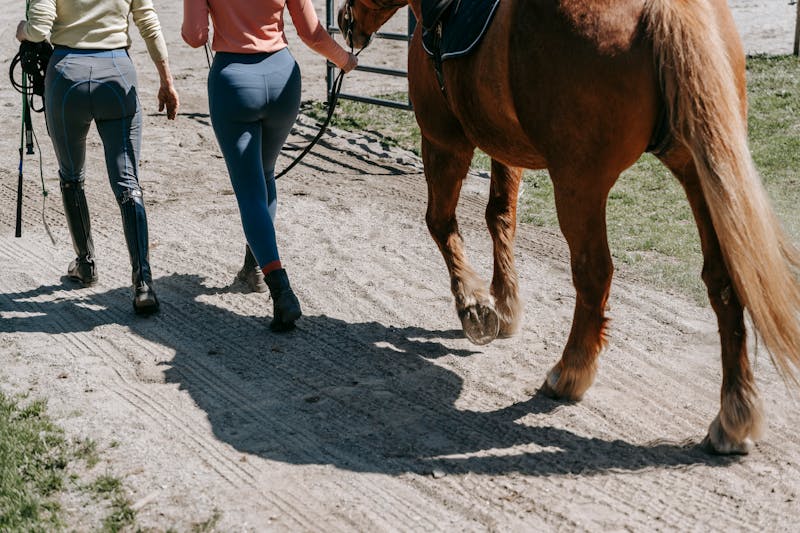
In Conclusion
Paying attention to weight distribution in saddle fitting makes a big difference in your horse’s comfort and performance. So, by getting the right saddle and keeping an eye on the fit, you’re setting up for success in your rides. Remember, happy horse, happy ride!
What good saddle fit should look like
A saddle should sit level, clear the withers and spine, make even contact through its panels, and remain stable while the horse walks and works. Check the fit on a clean, standing horse and again after movement; a saddle that looks acceptable at rest can shift or create pressure once the rider is mounted. Your horse’s topline, condition, workload, and the saddle’s flocking can all change over time.
Do not use a thicker pad to hide a saddle that pinches, bridges, rocks, or sits unevenly. Padding may fine-tune a sound fit, but it cannot correct a fundamentally unsuitable tree or damaged/uneven panels. If you see soreness, swelling, a change in way of going, reluctance to move forward, or repeated resistance during saddling, stop riding and ask a qualified saddle fitter and veterinarian to assess the horse and tack.
Frequently asked questions
How do I know if a saddle fits my horse?
Check that it sits level, clears the withers and spine, makes consistent panel contact, and stays stable during movement. A qualified saddle fitter should assess the fit with the rider mounted when possible.
Can a saddle pad fix a poor fit?
No. A pad can make small adjustments to a correctly fitting saddle, but it should not be used to compensate for pinching, bridging, rocking, or an unsuitable tree.
How often should saddle fit be checked?
Recheck whenever your horse changes condition, workload, or topline, and whenever the saddle is altered or reflocked. A practical seasonal check is sensible for many horses, but there is no universal schedule.
What should I do if my horse shows back pain?
Stop and investigate rather than riding through it. Have the horse examined by a veterinarian and have the saddle assessed by a qualified fitter; pain can have causes other than tack.
Sources and further reading
- AAEP: How to Evaluate Saddle Fit
- AAEP: How to Evaluate a Saddle as a Potential Cause of Back Pain
- AAEP: Strategies to Maximize Performance in Your Horse
Related Guides
Continue with these practical horse-care and riding guides:
- How Much Weight Can a Horse Carry?
- Can You Ride a Horse That Is Missing a Shoe?
- Choosing Tack for a Horse With a Sensitive Mouth

Written by
Phoebe writes about horse care, health, and behavior for Equestrian Space, blending hands-on stable experience with up-to-date veterinary guidance.