
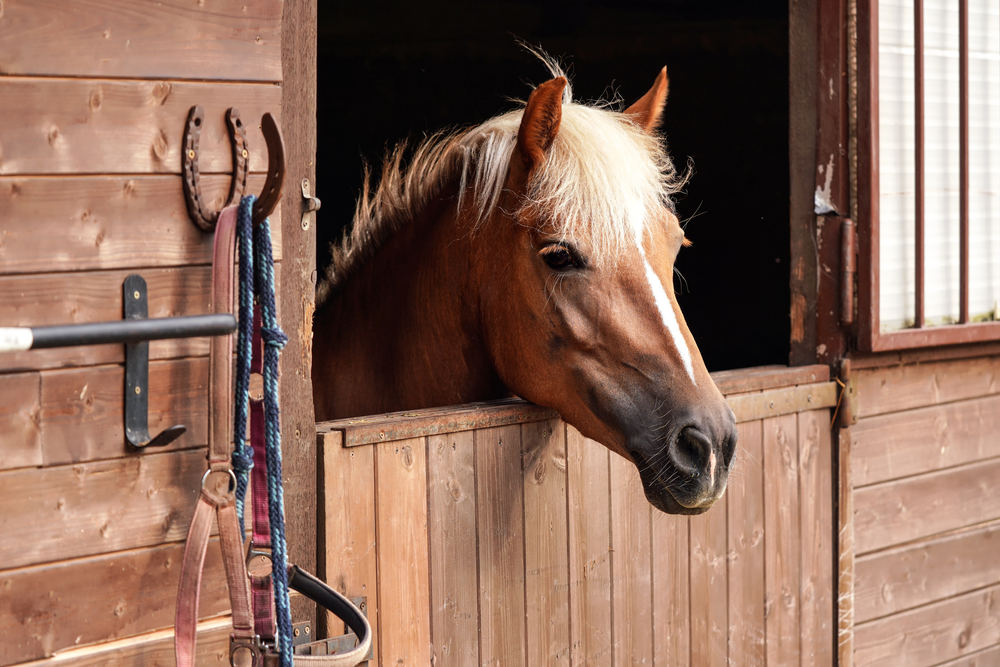
Horse care is not only about calories, sound hooves, and a suitable workload. Horses also need opportunities to forage, move, make choices, rest, and interact safely with their surroundings. Cognitive enrichment helps provide those opportunities, especially when weather, injury, management, or a busy facility limits turnout.
The goal is not to keep a horse constantly entertained. It is to make daily life more varied and species-appropriate without creating frustration, competition, digestive risk, or a substitute for basic care. The best enrichment fits the individual horse and complements turnout, forage, social contact, veterinary care, and thoughtful training.
What is cognitive enrichment for horses?
Cognitive enrichment is a change to a horse’s environment or routine that encourages safe investigation, learning, choice, or problem-solving. It can be as simple as changing where forage is offered, providing a safe object to investigate, or teaching a horse a calm and clearly rewarded behavior.
Enrichment is not a cure for every unwanted behavior. A horse that weaves, paws, bolts feed, becomes aggressive, or suddenly withdraws may be showing pain, fear, hunger, social stress, or another welfare problem. Rule out dental disease, ulcers, lameness, illness, inadequate forage, and unsafe handling with an equine veterinarian and qualified behavior professional before labeling the behavior boredom.
Start with the horse’s natural priorities
Foraging and feeding variety
Forage-based enrichment is usually the safest place to begin. Offer the horse’s normal hay ration in more than one safe location, use a properly sized small-hole hay net when appropriate, or scatter a measured amount of forage across a clean paddock. These methods can increase feeding time and encourage gentle searching, but they must not restrict intake so much that the horse goes long periods without forage.
Introduce any net, feeder, or puzzle gradually. Check that the horse cannot catch a hoof or shoe, and never hide moldy, toxic, or unfamiliar food in an enrichment device. Concentrate feeds should remain measured and should not be used as the main reward for a horse prone to digestive problems.
Movement and exploration
Turnout, hand-walking when medically appropriate, varied terrain, and calm changes of route often provide more meaningful stimulation than a collection of stall toys. A safe track, paddock layout, or rotation between familiar areas can encourage movement and investigation. Avoid abrupt exercise increases, slippery footing, poisonous plants, loose wire, and crowding at gates or water.
Social contact
Horses are social animals. When full-group turnout is not safe, consider compatible neighboring horses, visual contact, or supervised social time. Social enrichment must respect individual temperament and injury risk. A mirror, recorded sound, or novelty object is not an equivalent replacement for appropriate horse-to-horse contact.
Seven practical horse enrichment ideas
- Change the forage map: place small, safe hay portions in several locations so the horse can walk and search without reducing total forage access.
- Offer a browse-safe branch: only use a plant positively identified as non-toxic for horses, securely positioned, and free from chemicals, nails, wire, or splinters.
- Use a supervised slow-feeder trial: monitor eating time, frustration, dental safety, and whether the horse is still receiving adequate forage.
- Teach a simple choice behavior: reward a calm touch to a target or a relaxed stand. Keep sessions short and stop before the horse becomes pushy or confused.
- Rotate safe objects: a durable traffic cone, large horse-safe ball, or hanging object may invite investigation. Remove anything chewed, cracked, tangled, or swallowed.
- Vary a routine walk: let the horse pause and look from a safe distance, while keeping the handler’s attention on footing, traffic, and other hazards.
- Improve the resting environment: clean, dry bedding, fresh water, ventilation, shelter, and a comfortable place to lie down are welfare essentials—not optional enrichment extras.
How to tell whether enrichment is helping
Observe before and after the change. Useful signs include relaxed investigation, normal eating and drinking, normal manure, quiet resting, and a willingness to disengage when the activity ends. Concerning signs include frantic pawing, guarding, repeated striking, sweating, feed refusal, weight loss, new stereotypic behavior, or conflict between horses.
Keep a simple note of the activity, duration, food used, and response. Change one variable at a time and give the horse enough time to assess it. If an enrichment item creates competition, remove it and redesign the setup rather than expecting horses to “work it out.”
Common mistakes to avoid
- Using toys to mask inadequate turnout, forage, social contact, or veterinary attention.
- Adding novelty too quickly or presenting several unfamiliar objects at once.
- Using edible treats without accounting for the horse’s complete ration, metabolic risk, or choking risk.
- Leaving ropes, plastic, small parts, or improvised feeders unattended.
- Assuming a quiet horse is content or an active horse is bored; behavior needs context.
Related horse-care guides
Enrichment works best as part of a broader management plan. Continue with our guides on reading common horse behavior, stable time and management, natural movement and hoof wear, and long-term horse care planning.
Frequently asked questions
What is the best enrichment for a bored horse?
Begin with the basics: adequate forage, safe movement, appropriate social contact, and a comfortable environment. Then add one simple, supervised activity that matches the horse’s health, temperament, and management.
Do horses need toys?
No. Many horses benefit more from turnout, forage-searching opportunities, calm training, and social contact than from toys. Toys are optional tools, not a replacement for core welfare needs.
Can enrichment stop cribbing or weaving?
It may improve a horse’s environment, but it is not a guaranteed treatment. Stereotypic behavior warrants a review of forage access, turnout, social contact, pain, stress, and overall management with qualified professionals.
How often should horse enrichment be changed?
There is no universal schedule. Keep useful routines consistent, introduce changes gradually, and rotate only when the horse remains relaxed, safe, and adequately nourished.
Sources and further reading
- Merck Veterinary Manual: Social Behavior of Horses
- American Association of Equine Practitioners: Horse Health resources
- University of Minnesota Extension: Pasture Site Planning
This article is educational and does not replace an examination or individualized advice from an equine veterinarian.

Written by
Phoebe writes about horse care, health, and behavior for Equestrian Space, blending hands-on stable experience with up-to-date veterinary guidance.