
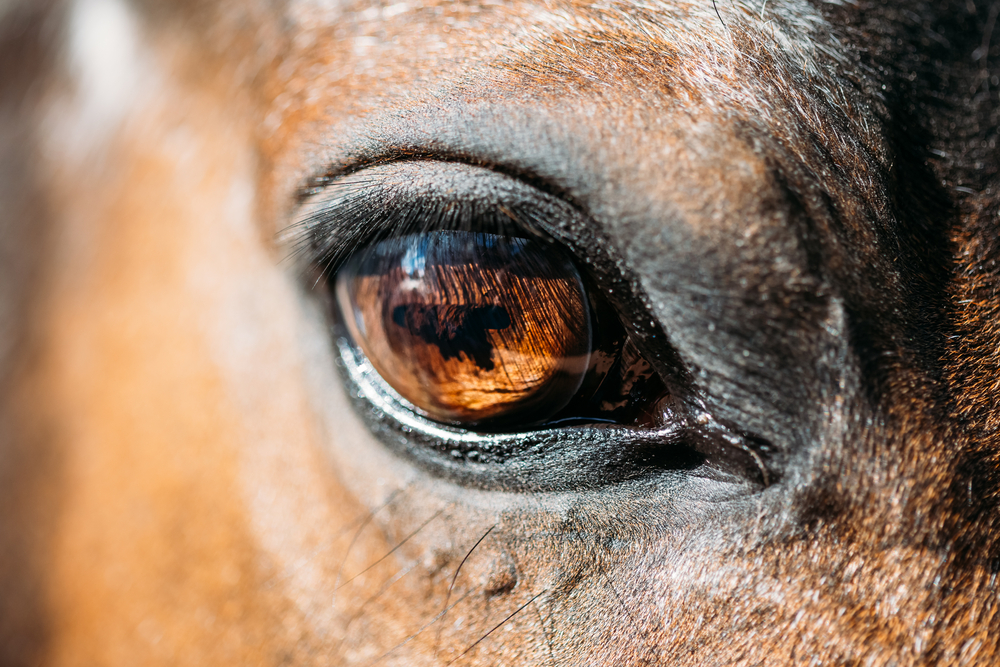
Horses do not sleep in one long block the way people often do. They are polyphasic sleepers, taking multiple short rest periods across a 24-hour day, with the pattern shaped by age, weather, herd security, workload, pain, and the stable or pasture environment. A horse may doze while standing, but it must lie down to complete the deepest part of its sleep cycle.
How a horse’s sleep cycle works
Equine sleep is usually described as a series of light and deeper stages rather than one uninterrupted night. Standing rest is useful because the horse’s stay apparatus lets it relax without collapsing, but standing does not provide every restorative stage. Horses also use sternal recumbency—lying upright on the chest—and lateral recumbency—lying on the side.
Rapid-eye-movement (REM) sleep requires recumbency. During REM, the horse’s muscles become more relaxed and you may see eyelid movement, twitching, or small limb movements. A horse that never feels safe enough to lie down, or cannot lie down comfortably because of pain, poor footing, or inadequate space, may not obtain enough REM sleep even if it appears to be resting while standing.
How much do horses sleep?
There is no single normal number that fits every horse. Healthy adults commonly sleep for short periods totaling roughly three to five hours in 24 hours, although individual observations vary and much of that time is light sleep or quiet rest. Foals generally spend more time lying down than adults, while older horses may change their lying behavior because of stiffness, arthritis, weakness, or difficulty getting back up.
Use the number as a guide, not a pass/fail test. A horse can be healthy while sleeping at a different time from its stablemates. The more useful questions are whether the horse can lie down safely, whether its routine has changed, and whether daytime behavior suggests fatigue or discomfort.
When and where do horses sleep?
Horses can sleep at any time, but many take longer or deeper rest periods at night. In a herd, horses often alternate vigilance: one animal may remain more alert while others rest. Domestic horses may choose a stall, run-in shed, sheltered paddock, or another location that feels secure and dry.
Environmental comfort matters. A stall should provide enough room for the horse to lie down and rise without striking a wall, with good ventilation, safe footing, and clean, dry bedding. A horse that is frequently disturbed by noise, lights, dogs, traffic, aggressive herd mates, or routine changes may reduce its recumbent sleep. For stable-management context, see our guides on equine nutrition, how the horse digestive system works, and supporting horses through seasonal changes.
Signs a horse may not be getting enough sleep
Sleep deprivation is not diagnosed from one missed nap. Look for a pattern and consider the whole horse. Possible warning signs include:
- Repeatedly buckling or dropping at the knees while standing.
- Brief episodes of apparent collapse or sudden loss of balance.
- Unusual drowsiness, irritability, poor concentration, or a change in training response.
- Reluctance to lie down, difficulty rising, or evidence that lying down is painful.
- New abrasions or “sleep marks” on the knees, fetlocks, or face after collapse-like episodes.
These signs can also indicate colic, neurologic disease, lameness, musculoskeletal pain, or another urgent problem. A horse that collapses, cannot rise, is severely weak, or has breathing or neurologic changes needs prompt veterinary attention. Do not try to force a tired horse to lie down or administer medication without veterinary direction.
How owners can support healthy sleep
- Make recumbency physically safe. Keep bedding clean, dry, deep enough for comfortable rest, and free of sharp or slippery hazards. Check that stall dimensions and door placement allow easy rising.
- Reduce avoidable disturbance. Keep a predictable schedule and manage bright lights, loud machinery, barking dogs, and unnecessary nighttime traffic.
- Watch herd dynamics. A horse may avoid lying down if another horse guards the shelter, stall front, or preferred resting area. Provide enough space and separate horses when safety requires it.
- Investigate pain. Arthritis, hoof pain, back pain, injury, and illness can make lying down or rising difficult. Ask a veterinarian to assess persistent changes.
- Keep a simple log. Record turnout, bedding, weather, workload, lying behavior, and any episodes of stumbling or collapse. A short video from a safe distance can help the veterinarian.
Frequently asked questions
Can horses sleep standing up?
Yes. Horses can doze and obtain some non-REM sleep while standing, helped by their stay apparatus. They still need to lie down for REM sleep, so “sleeping standing up” does not mean recumbent rest is unnecessary.
Do horses need to lie down every day?
Most horses need regular opportunities to lie down, although the timing and duration vary. A consistent refusal or inability to lie down is worth investigating, especially when paired with fatigue, stumbling, pain, or a change in behavior.
Why does my horse twitch or move its legs while lying down?
Small twitches or limb movements can occur during REM sleep. Dramatic movements, repeated startling, collapse, or signs of distress should not be assumed to be normal sleep; record what you see and contact a veterinarian.
Can poor bedding affect a horse’s sleep?
Yes. Wet, contaminated, insufficient, or slippery bedding can make a horse less willing to lie down and can increase the risk of injury. Bedding is only one possible cause, so persistent sleep changes still need a veterinary and environmental review.
Sources and further reading
- Rutgers Equine Science Center: Do You Need a Nap?
- AAEP/IVIS: Sleep and Sleep Disorders in Horses
- Frontiers in Veterinary Science: A Review of Equine Sleep
- UC Davis Center for Equine and Comparative Neurology: Equine Sleep and Sleep Disorders
- University of Helsinki: REM Sleep Supports Equine Motivation and Learning

Written by
Phoebe writes about horse care, health, and behavior for Equestrian Space, blending hands-on stable experience with up-to-date veterinary guidance.