
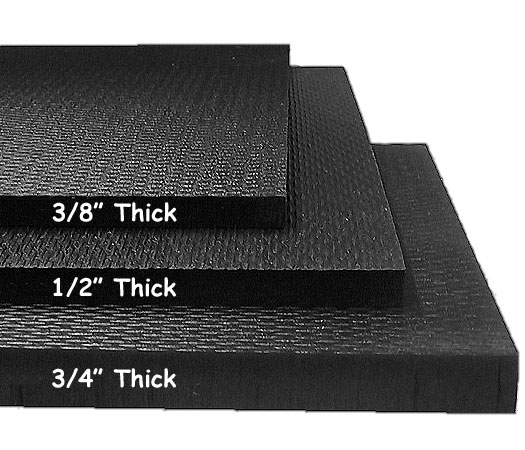
Choosing the right thickness for horse stall mats is less about buying the thickest rubber available and more about matching the mat to the horse, the subfloor, the stall layout, and the way the stall is managed. For most permanent stalls, 3/4-inch solid rubber mats are the practical default. A 1/2-inch mat can work in lighter-duty areas or over a well-prepared, forgiving base, while thicker specialty mats may make sense for foaling, rehabilitation, or unusually demanding use.
Quick answer: what thickness should horse stall mats be?
- 3/4 inch: the best all-around choice for most horse stalls, especially over concrete or another hard base.
- 1/2 inch: suitable for aisles, grooming areas, tack rooms, and some stalls with a firm, level subfloor and adequate bedding.
- 3/8 inch: generally a light-duty flooring option, not the first choice for a primary stall where the horse stands for long periods.
- 1 inch or more: a specialty option for recovery, foaling, or other situations where extra cushioning is justified; confirm the product’s stability and edge design before buying.
Thickness does not make a mat automatically safe. A level base, good traction, tight seams, sufficient bedding, and routine cleaning matter just as much.
Why 3/4-inch mats are the usual stall standard
A horse may spend many hours standing in the stall, shifting weight, pawing, lying down, and getting up. A 3/4-inch solid rubber mat provides a useful buffer between the horse and a hard surface while remaining durable enough for daily cleaning and heavy traffic. It is also common enough that replacement pieces, standard 4-by-6-foot formats, and installation guidance are relatively easy to find.
Penn State Extension describes solid rubber mats as durable and commonly available in the 1/2- to 3/4-inch range. Its stable-flooring guidance also emphasizes that mats belong on an even, compact base, such as well-prepared road base or concrete—not on a lumpy or unstable surface. See its horse stable flooring and drainage guidance for the underlying installation considerations.
When 1/2-inch stall mats may be enough
A 1/2-inch mat can be reasonable when the base is solid, smooth, and level; the horse is not spending extended periods on bare concrete; and the stall has appropriate bedding. It is often more useful in a grooming bay, aisle, wash-area approach, or other place where workers need a lighter, easier-to-handle mat.
Do not use a thinner mat to compensate for a poor subfloor. Rubber follows the shape of what is beneath it. Low spots can hold urine, unsupported edges can curl or move, and hard ridges can create pressure points. If you are comparing whole-stall coverage with individual pieces, the guide to one-piece versus individual 4×6 stall mats explains the trade-offs.
Why thickness is not the same as cushioning
Mat material, density, surface profile, and the base underneath all affect how a floor feels and performs. A soft mat can compress or move more than a dense mat of the same thickness. A textured top can improve wet traction, while grooves or channels on the underside can help manage liquid at seams. Neither feature replaces bedding or drainage planning.
Solid rubber is generally impervious: it does not absorb urine like bedding does. The stall still needs a plan for removing wet bedding and preventing liquid from collecting under or between mats. Mats should lie flat, seams should fit tightly, and the floor should be cleaned and allowed to dry periodically. For a broader buying checklist, read 5 features to look for in high-quality horse mats.
Choose thickness by subfloor and use
Concrete or other hard base
Choose 3/4-inch mats for most stalls over concrete, and use adequate bedding on top. Concrete must be sound, clean, and level. A mat can reduce the direct hardness of the surface, but it cannot correct a slab that slopes toward the wrong place, has sharp damage, or allows water to become trapped.
Compacted stone or road base
A compacted mineral base can work well when it is genuinely firm and level. Fill depressions, remove high spots, and compact the surface before placing mats. Thicker mats are not a substitute for compaction; movement underneath eventually creates gaps and uneven wear.
Foaling, recovery, or high-rest stalls
For foaling or rehabilitation, discuss the flooring plan with the veterinarian or facility professional. A thicker mat may add cushioning, but the entire system also needs stable footing, cleanable surfaces, secure seams, and enough bedding. A mat that shifts is a safety problem regardless of its thickness.
Installation details that matter more than an extra quarter inch
- Prepare the base: make it firm, level, smooth, and free of debris.
- Plan the layout: measure the stall and position seams away from the highest-traffic edges when possible.
- Fit mats tightly: gaps can collect wet bedding and allow edges to move.
- Check the door: confirm the finished floor will not interfere with the door swing or create a trip edge.
- Use help with heavy mats: a 4-by-6-foot rubber mat can be cumbersome and difficult to move safely alone.
- Bed and inspect: use enough dry bedding, then lift or shift mats on a planned schedule to check for trapped moisture.
If you are replacing old flooring, compare material, traction, fit, cleaning, and installation—not thickness alone. Recycled rubber mats in a barn can be a practical option, but the product still has to suit the stall and subfloor.
Should you buy horse stall mats from Treadall?
Once you know the stall dimensions, subfloor, and preferred thickness, compare the mat’s actual weight, texture, underside, edge fit, warranty, delivery cost, and return policy. Treadall is one option to include in that comparison for horse stall and barn matting; evaluate the product specification against your facility’s needs rather than choosing by thickness on the label alone. See Treadall horse stall mat options.
Related horse-stall planning guides
Thickness is only one part of a durable stall-matting system. For the broader installation and material decisions, see why recycled rubber mats are used in barns, features to look for in quality horse mats, and horse-stall door planning and safety.
Horse stall mat thickness FAQ
Is 3/4-inch rubber thick enough for a horse stall?
For most stalls, 3/4-inch solid rubber is a sensible default when installed on a firm, level base and used with appropriate bedding. It is not a guarantee of comfort or safety if the subfloor is uneven or the mats can move.
Can I use 1/2-inch mats in a horse stall?
Sometimes. A 1/2-inch mat may suit a lighter-duty stall with a stable subfloor and good bedding, but many owners choose 3/4 inch for a primary stall because it provides a more durable general-purpose system.
Do thicker mats eliminate the need for bedding?
No. Bedding absorbs urine, supports hygiene, and provides additional cushioning. A textured mat may reduce bedding use in some facilities, but it does not make bedding and moisture management irrelevant.
What goes under rubber stall mats?
Common bases include a properly compacted aggregate or a sound concrete slab. The base must be level and stable. Avoid installing mats over soft, muddy, or uneven ground without first correcting the floor construction.
Normally I do not read article on blogs however I would like to say that this writeup very forced me to try and do so Your writing style has been amazed me Thanks quite great post