
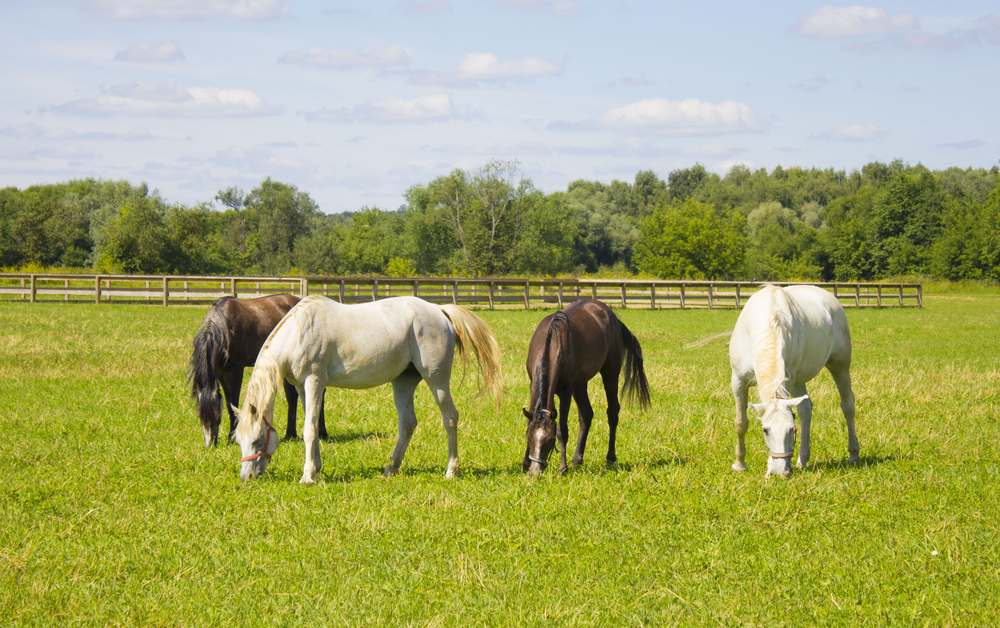
There is no universal number of days that every horse paddock should rest. A three-week break may be enough during fast spring growth, while drought, heat, poor soil, heavy stocking, or winter conditions may require substantially longer. The useful question is not simply “How long can you rest a horse paddock?” but “Has the forage recovered enough for grazing without pushing the plants or the horses too hard?”
As a starting point, many rotational systems graze a paddock briefly and then allow several weeks of recovery. Treat that as a planning framework—not a promise. Check forage height, plant vigor, soil moisture, weather, and stocking pressure before reopening a gate.
How long should a horse paddock rest?
A practical starting range is three to six weeks of rest during active growth, but the correct interval can be shorter or much longer. Fast-growing pasture after reliable rain may recover quickly. A paddock stressed by drought, overgrazing, traffic, or cold temperatures may need extended rest or a full renovation.
Move horses based on the condition of the plants rather than a calendar alone. Penn State Extension describes rotational grazing as controlling when and where horses graze, then resting the forage so it can regrow. A good rotation therefore has two controls: a minimum residual height before horses leave and enough regrowth before they return.
What determines the rest period?
- Forage species: grasses and legumes grow at different rates and respond differently to drought, frost, and heat.
- Weather and season: spring growth may be rapid; midsummer drought and winter dormancy can slow recovery dramatically.
- Soil and drainage: compacted, wet, or nutrient-poor ground cannot recover like deep, well-drained soil.
- Number and size of horses: more horses create faster grazing pressure and more hoof traffic.
- Paddock size and shape: small areas near gates, water, and hay feeders are usually damaged first.
- Horse grazing behavior: horses repeatedly shorten preferred areas while avoiding manure patches, creating a mix of overgrazed and rank grass.
Use grazing height—not the calendar—to make the decision
A paddock is not ready because three weeks have passed. Walk it and look at the average condition of the usable forage. The exact height depends on the pasture species and local recommendations, but the principle is consistent: avoid letting horses repeatedly graze plants into a short, weak residual. A commonly used rule is to move horses before the pasture is grazed down to roughly 3–4 inches, then wait until the stand has rebuilt a healthy leaf canopy before returning.
Do not measure only the tallest grass. Check the areas horses actually graze, especially around gates, shade, water, and hay stations. If the desirable plants are still short, the paddock needs more time even when other areas look tall.
A simple rotational grazing cycle
- Divide the available area into two or more grazing sections if possible. More sections generally create longer recovery windows.
- Start with a paddock that has adequate forage and firm, safe footing.
- Move horses before overgrazing begins. Do not wait for bare soil or for every blade to be eaten.
- Rest the grazed section while horses use another section or a properly managed dry lot.
- Inspect weekly. Record rainfall, grazing dates, plant height, mud, weeds, and bare areas.
- Return only when recovery is sufficient. If the grass is not ready, extend the rest period and provide hay elsewhere.
There is no requirement to force every paddock into the same schedule. One section may recover in four weeks and another may need eight. Flexible rotation protects the pasture better than moving horses on a fixed date.
What is a sacrifice paddock?
A sacrifice paddock—or dry lot—is an area intentionally used when the main pasture should not be grazed. It is particularly valuable during wet weather, drought, winter dormancy, or periods when all grazing sections need recovery at once. It should provide safe footing, water, shelter where needed, and a practical way to feed hay without turning the productive pasture into a muddy feeding yard.
Do not use a sacrifice area as an excuse to ignore drainage and manure management. Concentrated traffic can create mud, erosion, and runoff. Remove manure regularly, improve high-traffic surfaces, and keep feed and water positioned to reduce churn.
How to manage a resting paddock
Rest is more than closing the gate. During recovery, inspect fencing, remove hazardous objects, address drainage, and manage manure. Mowing or topping may help control mature stems, but mowing should be based on the pasture and weed situation—not used to hide severe overgrazing. Fertilizer and lime should follow soil-test recommendations and local extension guidance.
After heavy rain, keep horses off saturated ground even if the grass looks tall. Hoof traffic on wet soil can compact the root zone and create damage that takes far longer to repair than a short-term hay period. Likewise, after a drought or dormant season, reintroduce horses gradually and monitor horses that are prone to laminitis or weight gain with a veterinarian and qualified nutrition professional.
Common mistakes in paddock rotation
Using a fixed “three-week” rule
Three weeks is a starting estimate, not a biological law. Growth rate changes with temperature, rain, fertility, species, and stocking.
Leaving horses until the grass is bare
Bare soil increases erosion, mud, weed pressure, and the time required for recovery. Move horses while a protective residual remains.
Counting acreage without counting forage
An acreage-per-horse rule cannot account for every climate, soil, horse, or management system. Pasture may supplement hay rather than replace it, and a property with limited productive forage needs a conservative stocking plan.
Returning horses as soon as grass is green
Green does not always mean recovered. Look for a sufficiently developed stand, not just a thin flush of new leaves.
Bottom line
For many horse properties, three to six weeks is a useful initial rest range during active growth, but the right answer is determined by recovery. Move horses before the paddock is overgrazed, protect wet or dormant pasture with a dry lot, and reopen a section only when the forage and footing can tolerate grazing. Keep notes for one season; your own growth and rainfall records will make the next rotation far more accurate.
Related horse-facility and pasture guides
Sources
- Penn State Extension: How to Make Rotational Grazing Work on Your Horse Farm
- Penn State Extension: Basic Pasture Management for the Equine Owner
- University of Minnesota Extension: Pasture Site Planning

Written by
I've been around horses since I was 6 years old and started competing at the age of 9. Horses are my greatest passion and I am thrilled to be able to share my 23 (and counting) years of experience and knowledge with you.
Thanks for sharing. I read many of your blog posts, cool, your blog is very good.