
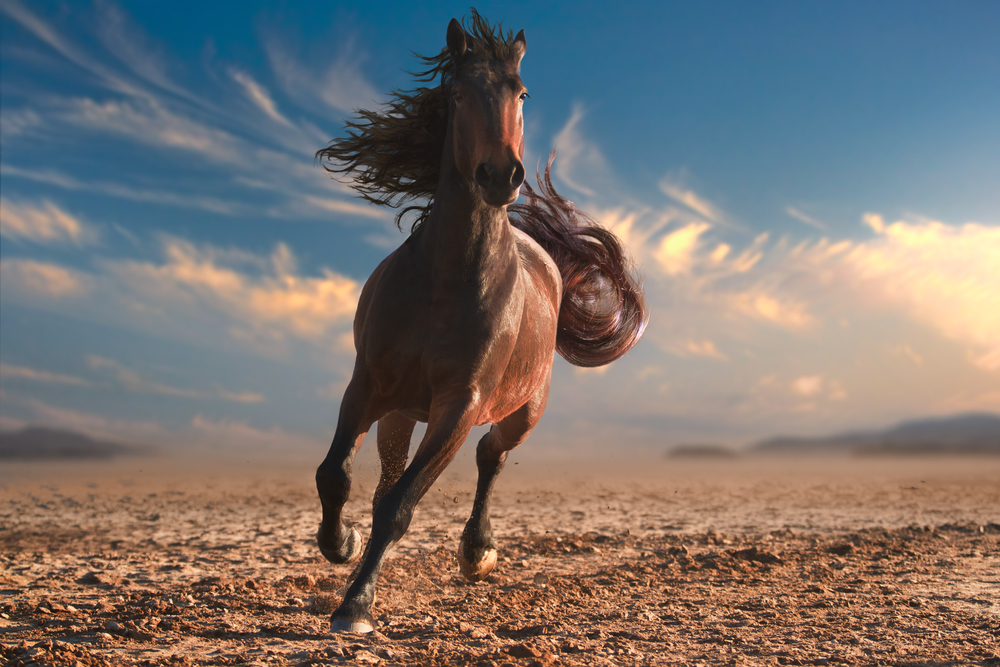
How long can a horse run? There is no single safe distance or time limit. A horse’s answer depends on gait, conditioning, fitness, body condition, terrain, weather, rider weight, footing, hydration, and whether the horse has been trained for sustained work. A fit endurance horse may travel for many hours at a controlled pace, while an unconditioned horse can overheat or suffer an injury during a much shorter gallop.
Related guides: Can horses run themselves to death? · Fastest horse breeds · What to do when a horse is missing a shoe
How far can a horse run safely?
At a gallop, a horse uses energy rapidly and normally works in short intervals rather than maintaining top speed for miles. A conditioned horse may gallop for a few minutes, recover, and repeat, but the appropriate interval depends on fitness and terrain. Canter and trot are more sustainable, while walking breaks reduce cardiovascular and muscular load.
In organized endurance riding, the distance is managed rather than raced continuously. The American Endurance Ride Conference explains that a 50-mile ride must be completed within 12 hours and a 100-mile ride within 24 hours, including mandatory holds. Horses also undergo veterinary checks and must be considered fit to continue. Those distances are for prepared horses under event rules—not a target for a horse beginning a conditioning program.
How long can a horse run without stopping?
“Without stopping” is the wrong measure for most horses. A horse can cover more ground by alternating walking, trotting, and controlled cantering than by galloping continuously. Endurance riders monitor recovery, appetite, hydration, gait, and behavior at intervals. A horse that is willing to move forward is not necessarily physically safe to keep running.
Breed can influence athletic tendencies, but it does not determine an individual horse’s limit. Arabians are prominent in endurance sport, Thoroughbreds are built for speed over race distances, and Quarter Horses excel at short acceleration. Training, soundness, acclimation, and management matter more than a breed label when deciding how much work is appropriate.
What determines a horse’s running endurance?
- Conditioning: Tendons, ligaments, muscles, lungs, and the cardiovascular system adapt gradually. Increase duration and intensity in small steps.
- Gait and pace: Walking and easy trotting cost less energy than sustained fast work. Frequent transitions and walk breaks can make a ride safer.
- Weather: Heat and humidity reduce the margin for error. A horse may overheat even when the distance seems modest.
- Terrain and footing: Deep, slippery, rocky, or uneven ground increases fatigue and injury risk.
- Load: Rider weight, tack, and pack weight affect effort. Fit and balance matter as much as the number on a scale.
- Soundness and health: Lameness, respiratory disease, pain, poor body condition, or recent illness can make exercise unsafe.
- Hydration and recovery: Access to water, appropriate electrolytes when advised, shade, and recovery time are part of the workload—not optional extras.
How to condition a horse for longer rides
Start with a veterinary assessment when a horse is unfit, returning from a layoff, older, young, overweight, or showing any lameness or breathing concern. Begin with regular walking and short periods of easy trot on suitable footing. Add time before speed, and add speed before difficult terrain. Keep a simple log of duration, gait, weather, pulse or recovery observations, appetite, and next-day soundness.
Do not use a single distance as a universal training prescription. A horse that completes a short ride comfortably may still need weeks or months of progressive work before a long trail ride. Stop and reassess if recovery is unexpectedly slow, the horse becomes reluctant, develops an irregular gait, or shows unusual fatigue.
Signs a horse needs a break or veterinary help
Stop exercise and seek prompt veterinary advice for marked lameness, collapse, severe or worsening breathing difficulty, disorientation, weakness, persistent high temperature, repeated refusal to drink, abnormal sweating (including failure to sweat in heat), muscle tremors, or signs of colic. Do not force a distressed horse to continue or rely on a generic “maximum miles” number.
After work, walk the horse until breathing settles, offer appropriate water, provide shade in hot conditions, and monitor recovery. Cooling and rehydration decisions should reflect the weather and the veterinarian’s guidance. If the horse does not recover as expected, treat that change as useful clinical information rather than trying to ride through it.
Sources and further reading
There is no single safe distance or running time for every horse. Conditioning, pace, terrain, weather, hydration, footing, and recovery all matter. Official endurance rules and extension guidance are useful guardrails, but they are not a substitute for a gradual training plan or veterinary assessment when a horse is unfit, ill, lame, or showing signs of heat stress.
- American Endurance Ride Conference: Conditioning the Endurance Horse
- University of Minnesota Extension: Caring for horses during hot weather
- Penn State Extension: Managing horses in hot temperatures
Frequently asked questions
Can a horse run for an hour?
Some conditioned horses can work for an hour when the session includes slower gaits and breaks. An hour of continuous galloping is a very different workload and is not a safe default.
Can a horse run 20 miles?
A prepared endurance horse may cover 20 miles under managed conditions, but distance alone does not prove safety. Fitness, pace, terrain, weather, load, and veterinary oversight all matter.
Is trotting safer than galloping for long distances?
Controlled trotting is generally more sustainable than fast galloping, but it can still cause fatigue or injury when the horse is unfit or the footing is poor. Pace must match the individual horse.
How do I know if my horse is fit enough for a long ride?
Look for consistent training, normal recovery, soundness during and after work, healthy body condition, and comfort over the planned terrain. A veterinarian or qualified conditioning professional can help build an individualized plan.
Sources: American Endurance Ride Conference endurance basics; AERC first-ride and recovery guidance; University of Minnesota Extension conditioning guidance.

Written by
I've been around horses since I was 6 years old and started competing at the age of 9. Horses are my greatest passion and I am thrilled to be able to share my 23 (and counting) years of experience and knowledge with you.