
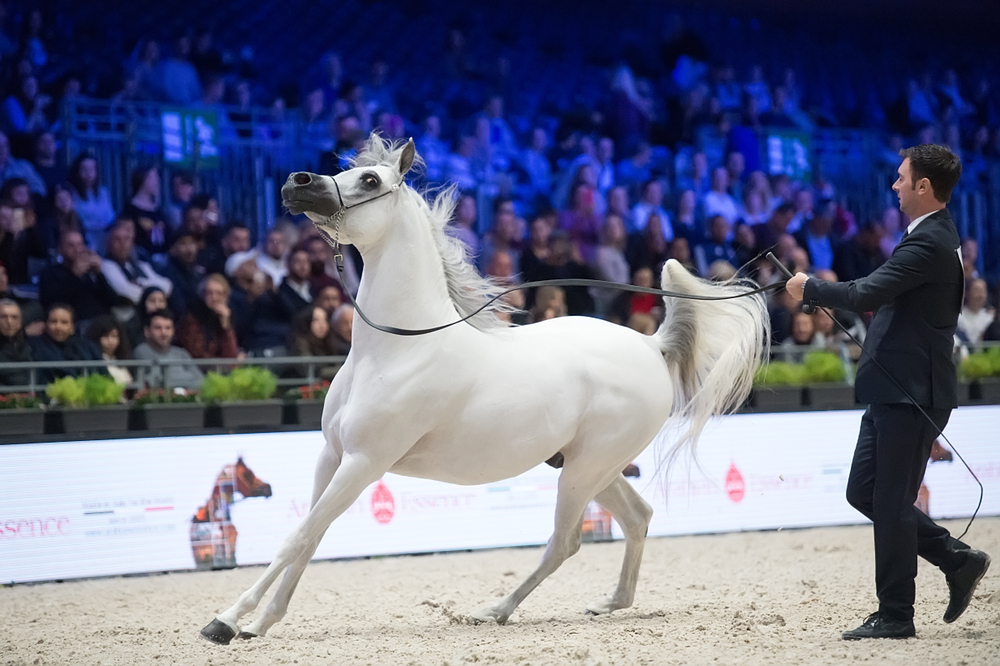
Many horses have a quiet barn name such as Daisy or Red but a much more elaborate name on a show program. That is not usually a joke or a branding exercise. A registered name has to identify one horse among thousands, fit the rules of the relevant breed or sport registry, and often preserve a connection to the horse’s pedigree.
Horses have unusual show names because competition and breed registries need names to be distinctive, searchable, and available for official records. A horse may therefore have a registered name for papers and results, a shorter barn name for everyday use, and a stable nickname that never appears on an entry form.
Registered name, show name, and barn name
These terms are often used interchangeably, but they are not always the same:
- Registered name: the official name recorded by a breed registry or racing authority.
- Show name: the name printed in competition schedules, results, and announcements. It may be the registered name, or a competition name accepted by the governing body.
- Barn name: the everyday name used by the owner, trainer, groom, and veterinarian.
A horse can be called “Maggie” in the barn and “Midnight’s Second Chance” on the results sheet. The formal name is not a claim that the horse has a different personality; it is an identification label that travels with the horse.
Why do horse names sound so elaborate?
They must be unique
Popular names disappear quickly when a registry has thousands of new foals every year. A name that sounds distinctive is less likely to be confused with another horse in a database, entry list, or result. Registries also protect famous names and names already in use.
Pedigree often supplies the inspiration
Breeders frequently combine a sire’s or dam’s name, a farm prefix, a family theme, or a meaningful word. Pedigree-based naming is common, but it is not universal. The final rules depend on the registry: some require or encourage naming conventions, while others simply offer a limited list of acceptable choices.
There is a character limit
Official names have to fit registration systems, entry forms, catalogs, timing software, and announcers’ screens. That is why registries count letters, spaces, punctuation, and sometimes numbers. A clever name can still be rejected if it is too long or uses a prohibited character.
Thoroughbred naming rules
For a Thoroughbred registered in the United States, the Jockey Club reviews proposed names. The commonly cited limit is 18 characters, including spaces and punctuation. Names must also avoid prohibited, offensive, misleading, or protected terms, and a famous horse’s name or a confusing variation may not be available.
Owners should check the current Jockey Club rulebook rather than rely on an old list copied from a blog. Availability changes, and an apparently original name may already be reserved, protected, or rejected. Registration timing also matters: a foal’s official name is not something to leave until the last minute if the horse will race.
AQHA naming rules
The American Quarter Horse Association allows a name of no more than 20 characters, including spaces and numbers. AQHA’s current guidance says that Arabic numerals may appear at the end, punctuation is not permitted, inappropriate names can be rejected, and written permission is required for a celebrity or living person’s name. A foal does not have to be named after its pedigree, even though many breeders choose a family connection.
Use the AQHA naming guidance and its Research Foal Name tool before printing paperwork or ordering a stall plate. Registry rules can be updated, so the official source is more reliable than a social-media naming list.
Breed traditions can create patterns
Some breed registries use naming patterns tied to a birth year, sire line, breeder prefix, or studbook. Friesian names, for example, have historically followed KFPS letter conventions for particular foaling years. Other registries use different systems or have no year-letter requirement at all. A name that looks mysterious may simply be following a convention familiar to that breed’s registry.
That is also why two horses with similar names may not be related, while horses from the same breeding program may share a prefix. The pattern is a clue, not proof of pedigree; confirm lineage through the registry’s papers.
Does a horse know its show name?
Usually, the horse learns the sounds and cues that people consistently use, not the legal meaning of a registered name. If a trainer always calls “Maggie” at feeding time, the horse may respond to that sound. If a rider uses the formal name at a show, the horse is responding to the handler’s voice, body language, and routine—not understanding a database entry.
Owners can use both names. The important practical rule is consistency: make sure the barn team, veterinarian, farrier, transporter, and competition paperwork all identify the same horse. A microchip, passport, registration number, or competition ID is more reliable than a name alone.
How to choose a horse show name
- Check the registry first. Confirm the character limit, punctuation rules, protected names, and submission deadline.
- Write down the exact pedigree spelling. A breeder prefix or family reference is easy to mistype.
- Say it aloud. Announcers and judges should be able to pronounce it without a long explanation.
- Run the radio test. If someone hears it once in a noisy warm-up ring, can they repeat it accurately?
- Keep the barn name practical. A short everyday name makes routine care and emergency communication easier.
- Search for unintended meanings. Check initials, translations, slang, and abbreviations before submitting.
- Save the confirmation. Keep the registry approval, certificate, and competition ID together.
Why some names become famous
A memorable name helps fans recognize a horse, but fame usually follows performance, personality, or a compelling story. A short name can become iconic, while a wonderfully theatrical name can remain obscure. The name is part of the horse’s public identity; it does not predict ability, temperament, or value.
Related horse guides
- 20 Most Popular Horse Breeds
- 15 Fastest Horse Breeds
- 15 Biggest Horse Breeds
- How to Choose the Right Stirrups
FAQ: horse show names
Can a horse have two names?
Yes. A horse may have an official registered or competition name and a separate barn name. Use the official name and registration or competition ID whenever paperwork requires it.
Can I change a horse’s registered name?
Sometimes, but the answer depends on the registry and the horse’s status. Racing, breeding, and competition records can make changes restricted or impossible. Ask the registry before using a new name publicly.
Do horse show names have to come from the pedigree?
No. Pedigree-based names are common, but many registries allow other names if they meet the applicable rules and are available.
Why do some names include a farm prefix?
A prefix can identify the breeder or breeding program and connect related horses. It is useful for recognition, but it does not replace the horse’s registration and competition identification.
Sources and further reading
The Jockey Club rulebook; AQHA: What rules are there for naming a foal?; US Equestrian: Horse Recording/ID; KFPS.

Written by
I've been around horses since I was 6 years old and started competing at the age of 9. Horses are my greatest passion and I am thrilled to be able to share my 23 (and counting) years of experience and knowledge with you.