- Your source for stall mats, rubber arena footing, arena harrows and arena dust control.
Introduction
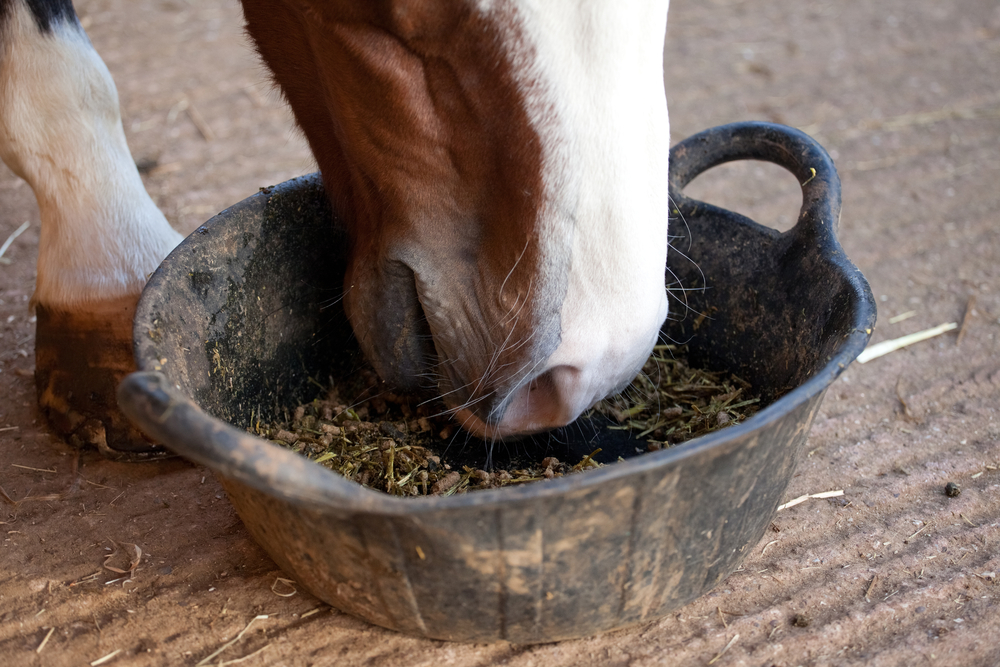
What we put into a horse’s feed bucket has a direct impact on health, performance, behavior, and longevity. Yet for many horse owners, equine nutrition labels can feel confusing, vague, or even misleading. Marketing buzzwords, proprietary blends, and incomplete ingredient disclosures often raise an important question: What’s really in the bucket? Transparency and truth in equine nutrition are essential for making informed feeding decisions that truly support equine welfare.
Understanding Equine Feed Labels
Equine feed labels are designed to provide information about what a product contains and how it should be fed, but they don’t always tell the full story. A typical feed label includes:
Guaranteed analysis (minimums and maximums for nutrients like protein, fat, and fiber)
Ingredient list (often in descending order by weight)
Feeding directions and intended use
While these components are helpful, they require careful interpretation to understand what your horse is actually consuming.
Common Issues in Feed Transparency
Proprietary Blends
Many feeds list “proprietary blends,” which allow manufacturers to group ingredients without specifying exact quantities. While legal, this can obscure how much of each ingredient your horse is truly getting.Marketing vs. Reality
Terms like natural, premium, or complete are often marketing-driven rather than nutritionally defined. These words don’t always guarantee higher quality or suitability for your specific horse.Byproducts and Fillers
Some feeds include byproducts or low-cost fillers that may meet basic nutritional requirements but offer limited digestibility or nutritional value compared to whole-food ingredients.
Key Ingredients to Look For (and Question)
Understanding ingredients empowers owners to make better choices.
| Ingredient Type | Why It Matters | What to Watch For |
|---|---|---|
| Protein sources | Support muscle, growth, and repair | Quality (soybean meal, alfalfa) vs. vague plant protein |
| Carbohydrates | Provide energy | Excess sugars and starches can increase metabolic risk |
| Fats | Concentrated, cool energy | Named fat sources are preferable |
| Vitamins & minerals | Balance deficiencies | Chelated or bioavailable forms are more effective |
| Additives | Improve digestion or joint health | Evidence-based inclusion, not just label appeal |
The Importance of Honest Ingredient Disclosure
Transparent nutrition allows owners and professionals to:
Match feed to a horse’s age, workload, and health condition
Avoid ingredients that may trigger allergies, metabolic disorders, or behavioral issues
Compare products fairly based on quality, not just branding
Full disclosure builds trust between manufacturers, veterinarians, nutritionists, and horse owners.
The Role of Veterinarians and Equine Nutritionists
No feed label replaces professional guidance. Veterinarians and equine nutritionists can:
Interpret feed labels accurately
Identify nutritional gaps or excesses
Recommend diets based on forage analysis, not just concentrate feeds
Their expertise helps translate transparency into practical, horse-specific feeding strategies.
Practical Tips for Horse Owners
Always start with forage; hay quality forms the foundation of equine nutrition.
Read beyond the front of the bag—focus on ingredients and guaranteed analysis.
Ask manufacturers questions; reputable companies should welcome transparency.
Monitor your horse’s body condition, coat quality, and behavior as feedback on the diet.
Conclusion
Knowing what’s really in the bucket goes beyond reading a label—it’s about understanding, questioning, and making informed choices. Transparency and truth in equine nutrition empower horse owners to prioritize health over hype and substance over marketing. When we demand clarity and honesty in what we feed our horses, we take a meaningful step toward better care, improved performance, and long-term equine well-being.