
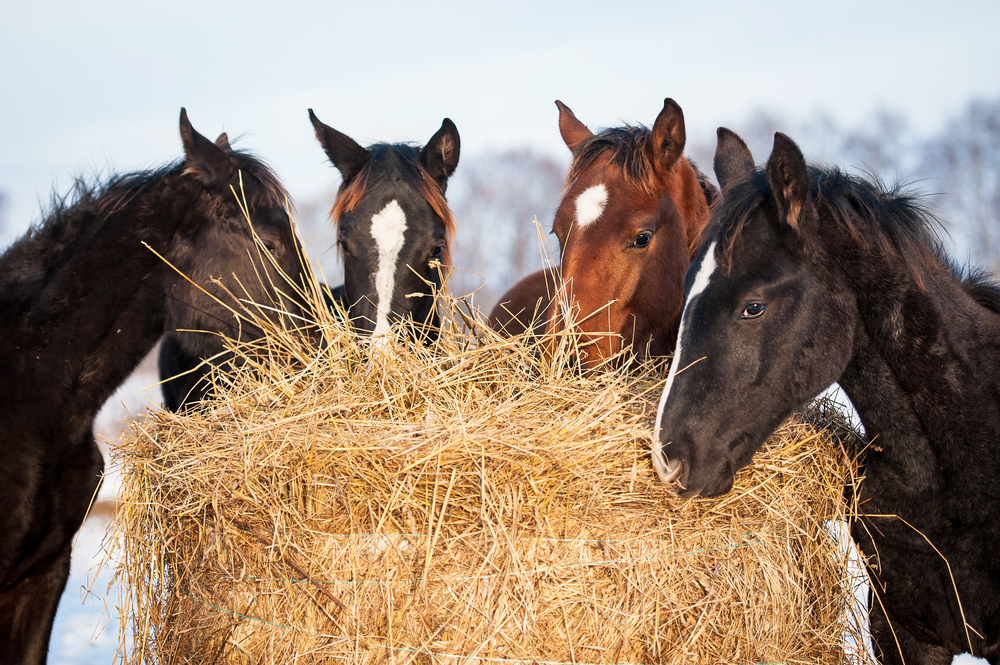
Hay is usually the largest recurring feed expense for a horse, but the bale price is only part of the calculation. Weight, nutrient quality, waste, delivery, storage, and seasonal availability determine what that hay really costs. This guide explains how to compare hay fairly, budget for a year, and protect the forage you have already paid for.
What determines the price of horse hay?
Hay prices vary by region and season, so a single national “average price” is not a reliable buying tool. The main drivers are:
- Crop and maturity: Grass, mixed grass-legume, and alfalfa hay have different nutrient profiles. Earlier-cut forage is often more nutrient-dense, while mature grass hay may suit an easy keeper.
- Bale weight and density: Two “small square bales” can weigh very different amounts. A cheaper-looking bale may cost more per pound of usable forage.
- Quality and testing: Leaf retention, maturity, dust, mold, weeds, and a laboratory analysis affect value. Pay for nutrients your horse actually needs, not a premium label alone.
- Freight and handling: Delivery distance, unloading, broker fees, and whether you buy by the bale or ton can materially change the final price.
- Weather and supply: Drought, rain during harvest, and regional shortages can raise prices or reduce the consistency of available lots.
How to compare hay prices fairly
Compare hay by weight before comparing the sticker price. Divide the delivered price by the bale’s weight to find the cost per pound. For example, a 50-pound bale at $8 costs 16 cents per pound; a 35-pound bale at $6 costs about 17 cents per pound. The second bale is cheaper at the checkout but more expensive by weight.
For large or inconsistent bales, ask the supplier for an average weight or weigh a representative sample. If hay is sold by the ton, confirm whether the quote is for delivered weight and whether loading or delivery is extra. Keep invoices and note the lot, cutting, and date so you can compare quality as well as price.
Estimate your annual hay budget
Most adult horses consume roughly 1.5% to 2.5% of body weight per day in total feed, with forage making up the foundation of the ration. A common starting estimate is about 2% of body weight in forage per day, but the right amount depends on the individual horse, pasture, hay analysis, workload, body condition, and veterinary or nutrition advice.
To build a useful budget:
- Record each horse’s body weight or best weight estimate and daily forage allocation.
- Multiply daily pounds by the number of feeding days.
- Divide by the average usable pounds per bale or by 2,000 pounds per ton.
- Add a realistic waste allowance based on your feeder, weather, and storage—not an optimistic zero-waste assumption.
- Add delivery, testing, and emergency reserve costs.
Do not change a horse’s ration solely because hay prices moved. A cheaper forage can become an expensive mistake if it causes weight gain, poor condition, digestive upset, or a need for compensating supplements. Have a veterinarian or equine nutritionist help balance diets for growing, pregnant, lactating, senior, metabolic, or hard-working horses.
Hay quality can be worth more than a low price
Inspect hay before accepting a load. It should be appropriate for the horse’s needs, free of obvious mold and toxic plants, and stored so it stays dry. Dust, musty odor, heating, excessive coarse stems, or visible spoilage are reasons to stop and investigate. A forage analysis can identify digestible energy, protein, fiber, sugar, and minerals that cannot be judged reliably by sight.
University of Minnesota Extension notes that plant maturity changes nutrient density and that horse-quality hay is commonly baled at about 10% to 15% moisture. Those figures are guidance, not a substitute for testing or a conversation about the individual horse. Hay that has been rained on is not automatically unusable, but quality can change and mold risk must be assessed.
Reduce the amount of hay you waste
Waste is feed you paid for but never fed. Use a feeder or hay net suited to the horse and location, keep forage off wet ground, and measure what is discarded for a week. Round bales left unprotected outdoors can lose substantially more usable material than hay kept under cover. Slow-feed equipment may also reduce sorting and extend eating time, but it must be introduced safely and checked for entanglement hazards.
Store bales on pallets or another well-drained surface with airflow underneath. Protect them from precipitation while allowing moisture to escape. Keep hay away from ignition sources and inspect stored lots for heat, mold, and water intrusion. Use older sound hay first, and do not feed questionable forage simply because it is already paid for.
Should you buy hay in bulk?
Bulk buying can lower the delivered cost and protect you from a mid-season shortage, but only if you have safe storage and enough turnover. Calculate the cost of the storage space, handling, pallets, weather protection, and spoilage risk. A smaller, higher-quality purchase may beat a bulk bargain that loses nutrients or becomes unusable.
Before committing, ask whether the supplier can provide a representative sample, analysis, bale weights, cutting information, and delivery terms. Buy enough to maintain continuity, but leave room to reject a poor lot rather than locking the horse into a year of unsuitable forage.
Related horse-care guides
- What Kind of Hay Is Not Good for Horses?
- Can a Horse Live on Hay or Grass Alone?
- Should You Wet or Soak Your Horse’s Feed?
- How Long Can a Horse Stay in a Stable?
Sources and further reading
- University of Minnesota Extension: Selecting and storing horse hay
- University of Minnesota Extension: Using hay in horse diets
- University of Minnesota Extension: Ten ways to stretch your horse’s hay supply
- MSD Veterinary Manual: Feeding practices in horses

Written by
Phoebe writes about horse care, health, and behavior for Equestrian Space, blending hands-on stable experience with up-to-date veterinary guidance.