- Your source for stall mats, rubber arena footing, arena harrows and arena dust control.
Introduction
Understanding equine body language is an essential skill for anyone working with horses. These intelligent, sensitive animals communicate primarily through posture, movement, and subtle cues. Interpreting these signals can reveal valuable insights into a horse’s comfort, focus, stress level, and intent. However, a horse’s behavior can vary significantly depending on the environment—what a horse communicates in the open field may not mirror what it expresses in the confines of an arena. Decoding equine body language effectively means recognizing how context influences behavior and response.
What Is Equine Body Language?
Equine body language refers to the physical expressions horses use to communicate, including:
Ear position
Tail movement
Facial tension
Posture and movement
Vocalizations (nickers, snorts, squeals)
These signals are affected by instinct, training, and environment. Horses are prey animals by nature, so their expressions of alertness, fear, dominance, or relaxation can shift based on surroundings and perceived threats or comfort.
Key Differences Between Field and Arena Behavior
Spatial Awareness and Freedom of Movement
| Behavior Aspect | In the Field | In the Arena |
|---|---|---|
| Movement | Free, expansive, often relaxed or playful | Restrained, structured, focused |
| Posture | Looser, more exploratory | Tense or collected, depending on training |
| Tail carriage | Naturally swinging | Sometimes held or stiff due to focus or pressure |
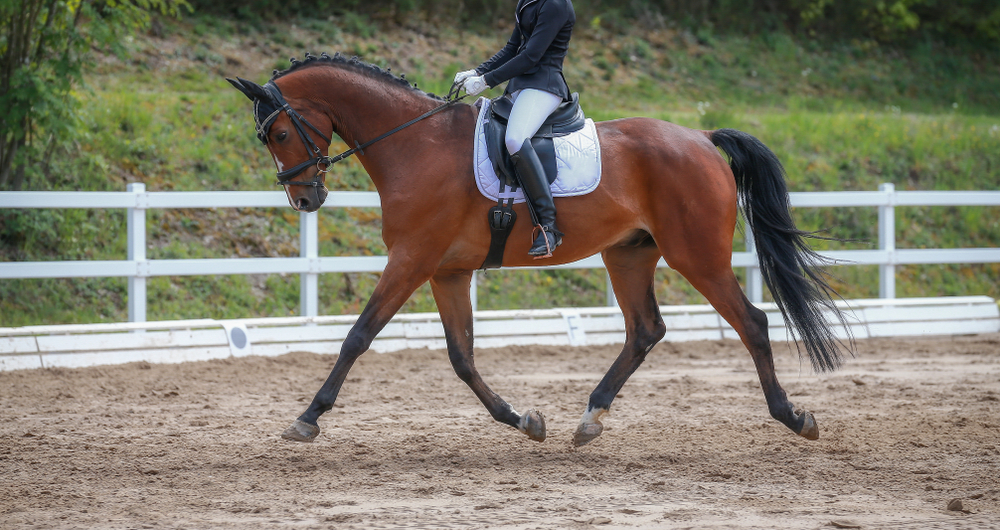
Horses in the field often move with fluidity and curiosity, expressing social behaviors or grazing patterns. In contrast, the arena demands purpose-driven movement, which can influence body tension and responsiveness.
Social Dynamics and Herd Behavior
| Social Cues | In the Field | In the Arena |
|---|---|---|
| Ear flicking, nudging, grooming | Common with herd mates | Less frequent, limited to work or handler interaction |
| Threat displays (e.g., pinned ears) | Used to establish hierarchy | Rare, but may appear during close work or competition |
In natural turnout settings, horses engage in herd communication constantly. In arenas, especially during training or shows, social cues become secondary to human cues, though moments of reactivity can still appear under stress.
Stress and Alertness Signals
| Stress Indicators | Field Context | Arena Context |
|---|---|---|
| Wide eyes, raised head | May indicate a new object or predator | Often seen when overwhelmed by pressure or crowd |
| Pawing, tail swishing | Could be boredom or insects | Frequently a sign of irritation or anxiety during work |
| Sweating | Rare unless hot or anxious | Common during intense training or unfamiliar settings |
Arena environments introduce different stressors—mirrors, unfamiliar horses, rider cues, or spectators—that can elevate a horse’s alert state compared to the more familiar, calming environment of a pasture.
Interaction with Humans
| Human-Horse Interaction | Field | Arena |
|---|---|---|
| Approachability | Depends on socialization and mood | May improve due to conditioning and familiarity with work |
| Responsiveness | Can be less focused, especially when distracted by herd | Typically heightened, as training takes center stage |
| Trust and relaxation | Revealed through soft eyes, lowered head, and mutual grooming | Evident in rhythmic gaits, willing transitions, and steady breathing |
Some horses are more affectionate or relaxed in the field, while others associate the arena with consistent interaction and thus become more attentive there.
Why Context Matters
Misinterpreting a horse’s body language can lead to accidents, training setbacks, or strained relationships. For example, pinned ears in the field may be a playful warning among herd mates, but the same signal in the arena could reflect discomfort with saddle fit or training pressure. Understanding the environmental lens through which body language is expressed enables more empathetic and effective handling.
Tips for Accurate Interpretation
Observe holistically: Don’t rely on a single cue—consider posture, facial expression, and environment together.
Note behavioral patterns: Track how a horse’s body language changes across settings and times of day.
Respect thresholds: Watch for signs of rising tension and intervene before stress escalates.
Consider the horse’s history: Past trauma or training can shape behavioral expressions uniquely.
Conclusion
Equine body language is a rich, silent conversation—and it changes depending on the setting. By recognizing how a horse behaves differently in the field versus the arena, handlers can deepen their understanding, improve communication, and promote trust and well-being. Whether you’re observing a horse grazing peacefully under the sun or performing in a structured riding session, decoding their cues with context in mind is key to a safe and rewarding partnership.