
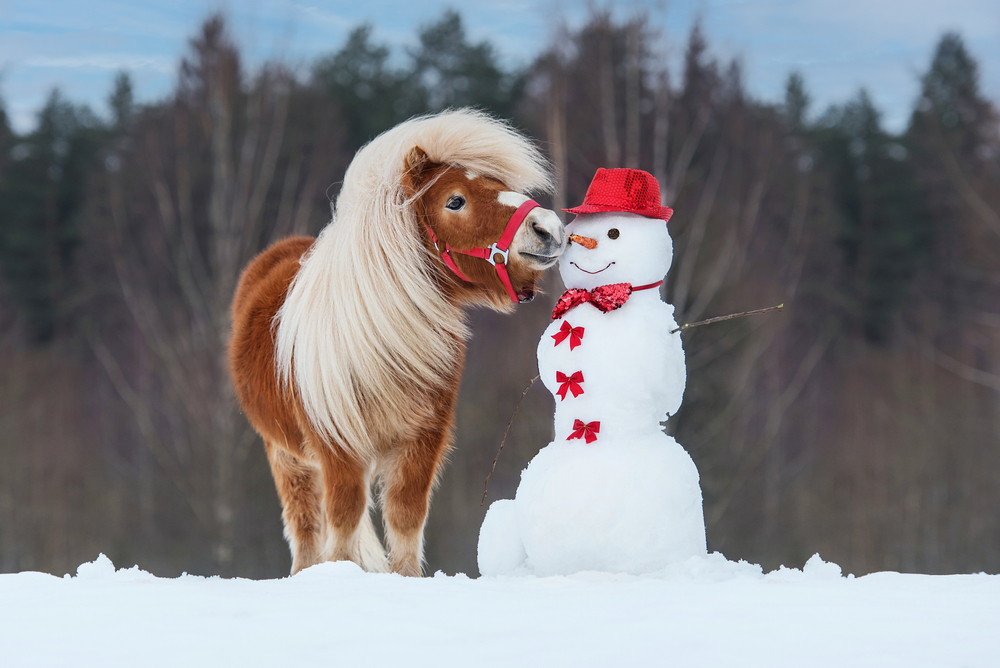
Whether a horse can stay outside in winter depends on the individual horse and the conditions at the property—not a universal thermometer number. Many healthy, acclimated horses do well outdoors when they can stay dry, escape wind and precipitation, eat enough forage, drink freely, and walk on safe footing. Others need more protection because they are clipped, underweight, elderly, ill, recovering, or not acclimated to the local climate.
When winter turnout can work
Outdoor winter living can be reasonable when the horse has a dry place to stand and a genuine windbreak, not just a fence line. A three-sided run-in, natural shelter that is safe and permitted, or another appropriately designed refuge should allow every horse access without crowding. Check that entrances do not create trapping points and that the roof, posts, and fencing remain sound after snow, ice, and wind.
Forage is central to cold-weather management. Horses generate heat while digesting forage, so an outdoor horse generally needs consistent access to suitable hay or pasture rather than long empty periods. Adjust the amount with your veterinarian or nutrition professional if the horse is losing condition, and account for wasted hay in wet or snowy conditions.
When a horse needs more protection
Use a more conservative plan for horses with a low body-condition score, advanced age, dental problems that limit forage intake, chronic disease, recent relocation, a clipped coat, or a history of difficulty maintaining weight. A blanket can be useful for some of these horses, but it is not a substitute for shelter, calories, or daily observation. A wet blanket, poor fit, or blanket left on during changing weather can create its own problems.
Winter signs that require action
- Persistent shivering, a cold or wet coat that does not dry, or unusual lethargy
- Weight loss, a tucked-up appearance, or a drop in normal appetite
- Reduced drinking, impaction-colic signs, or limited access to water because of ice
- Repeated slipping, packed ice, deep mud, or unsafe access to shelter and feed
- Coughing, nasal discharge, breathing changes, or any sign of illness
Move the horse to a safer setup and contact a veterinarian for concerning clinical signs, rapid weight loss, persistent shivering, colic signs, or a horse that cannot rise or move normally.
Water, forage, and footing checklist
Check water at least daily—and more often during hard freezes—to confirm that it is clean, available, and not merely a block of ice. Some horses drink less in cold weather, increasing dehydration risk. Keep hay and water positioned so the horse can use them without standing in deep mud or ice. Remove manure and wet organic material from high-traffic areas, and maintain a firm route between shelter, water, and feed.
Winter turnout is not automatically safer than stabling. A horse confined indoors still needs ventilation, movement opportunities, clean bedding, and frequent observation. Likewise, an outdoor horse needs a practical emergency plan: who will check the horses, how water will be restored, where the horse can go during a storm, and how veterinary care will be reached if roads close.
Related winter horse-care guides
- How Cold Can Horses Tolerate?
- Equine Hydration in Winter: Preventing Dehydration in Cold Climates
- How Much Land Do You Need for a Horse? (2026 Pasture Planning Guide)
Sources and further reading
This guide is educational and does not replace an examination or individualized winter plan from your veterinarian. For additional cold-weather management guidance, see the University of Minnesota Extension guide to caring for horses in winter and Penn State Extension’s equine winter wellness guidance.
Frequently asked questions
Can horses stay outside in winter?
Yes, many healthy, acclimated horses can remain outside in winter when they have shelter from wind and precipitation, reliable water, forage, and safe footing. Individual age, body condition, coat, health, and local weather matter more than a single temperature cutoff.
When should a horse come inside during winter?
Bring a horse into a suitable shelter or stable when severe weather exceeds its preparation or shelter, when footing becomes dangerous, or when the horse is wet, shivering, losing weight, dull, or unable to access forage and water. Horses with illness, advanced age, or clipped coats may need a different plan set with a veterinarian.
Do horses need blankets outside?
Not automatically. A healthy, unclipped horse with a full winter coat may not need one, but clipped, thin, elderly, ill, or poorly acclimated horses may benefit from a correctly fitted, weather-appropriate blanket. Check under the blanket and remove it regularly to inspect skin, condition, and moisture.
How do you keep an outdoor horse safe in winter?
Provide a well-drained windbreak or run-in, continuous forage, unfrozen water, salt access, daily checks, and a surface that remains passable. Monitor body condition and manure, clear ice hazards, and have a plan for power, water, transport, and veterinary emergencies.

Written by
I've been around horses since I was 6 years old and started competing at the age of 9. Horses are my greatest passion and I am thrilled to be able to share my 23 (and counting) years of experience and knowledge with you.